CROMLahore Heritage Skills Training Projects
Programme Overview
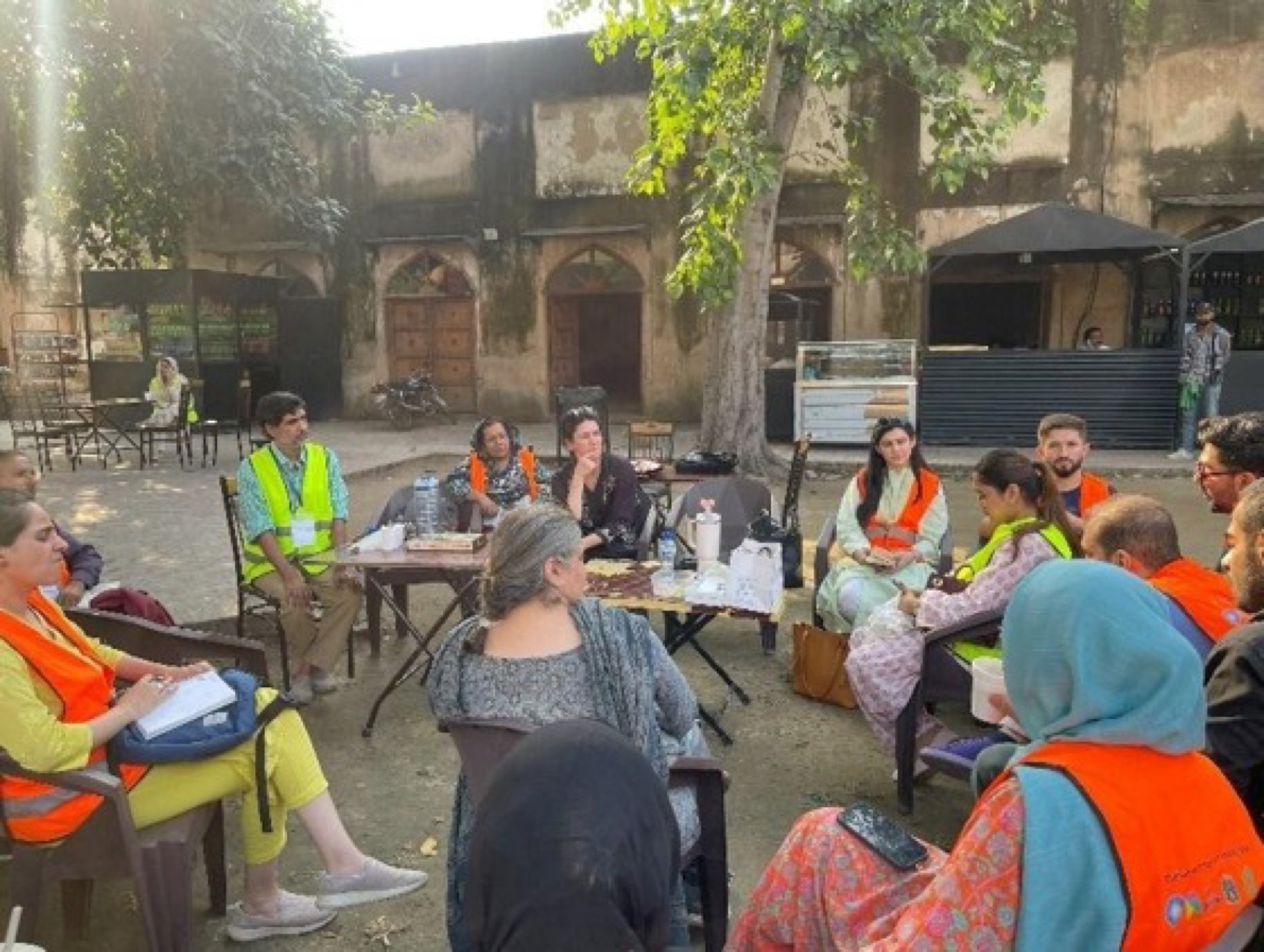
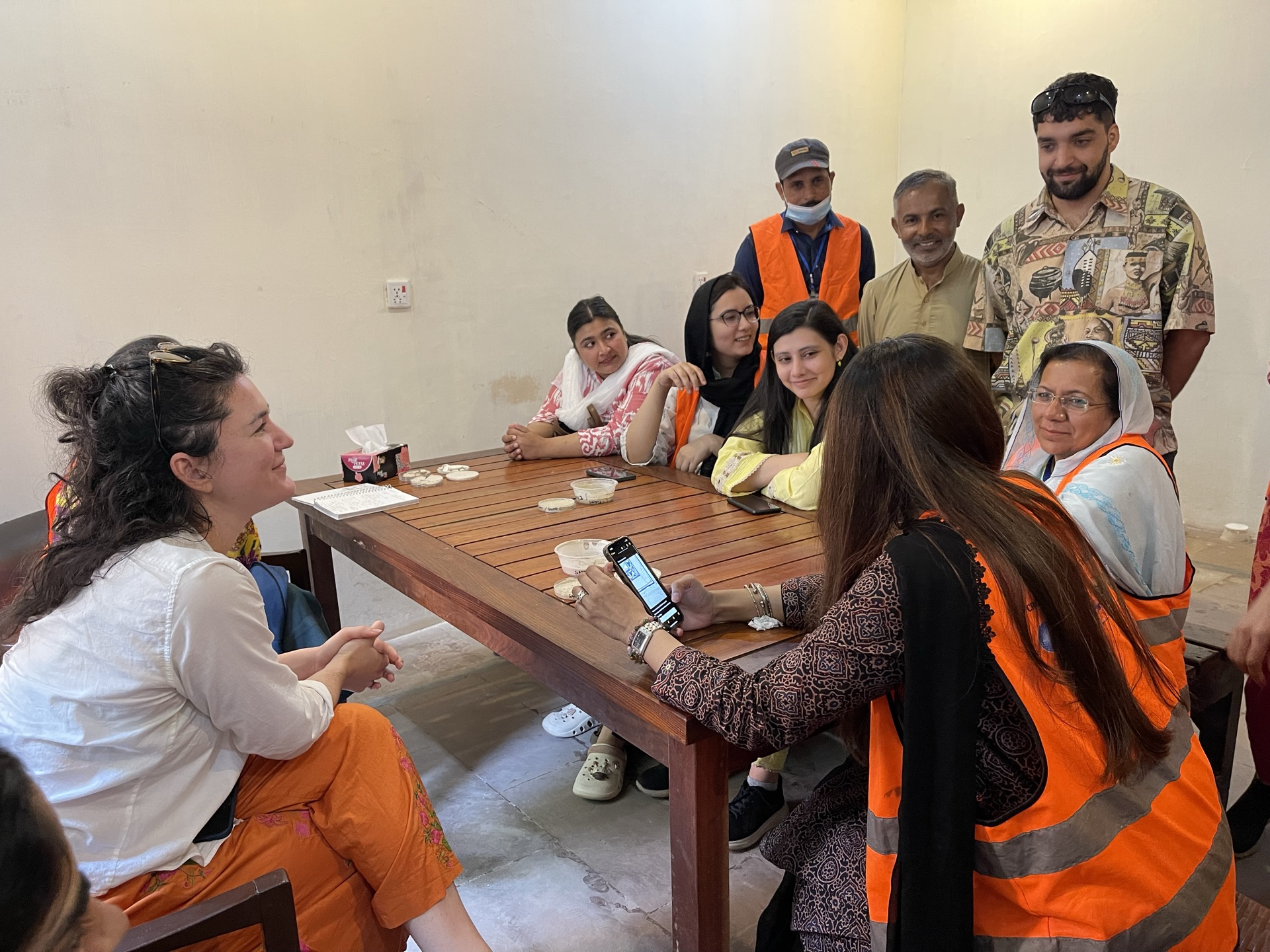
The CROM Lahore Training Workshop was conceived as a developing platform for training emerging practitioners in traditional and contemporary heritage conservation and restoration techniques, while enabling direct engagement with national and international experts. The programme emphasized skill-based learning, knowledge exchange, and exposure to evolving conservation practices within historic contexts.
The programme was implemented in collaboration with the Commonwealth Heritage Forum (CHF), whose support enabled capacity-building for emerging heritage practitioners, strengthened skills transfer through structured training and expert exchange, and reinforced sustainable conservation practices within a wider Commonwealth heritage framework; the Aga Khan Cultural Service–Pakistan (AKCS-P), which contributed technical expertise, conservation knowledge, and institutional support rooted in long-term heritage stewardship; and the Walled City of Lahore Authority (WCLA), which facilitated site access, contextual learning, and engagement within Lahore’s historic urban fabric.
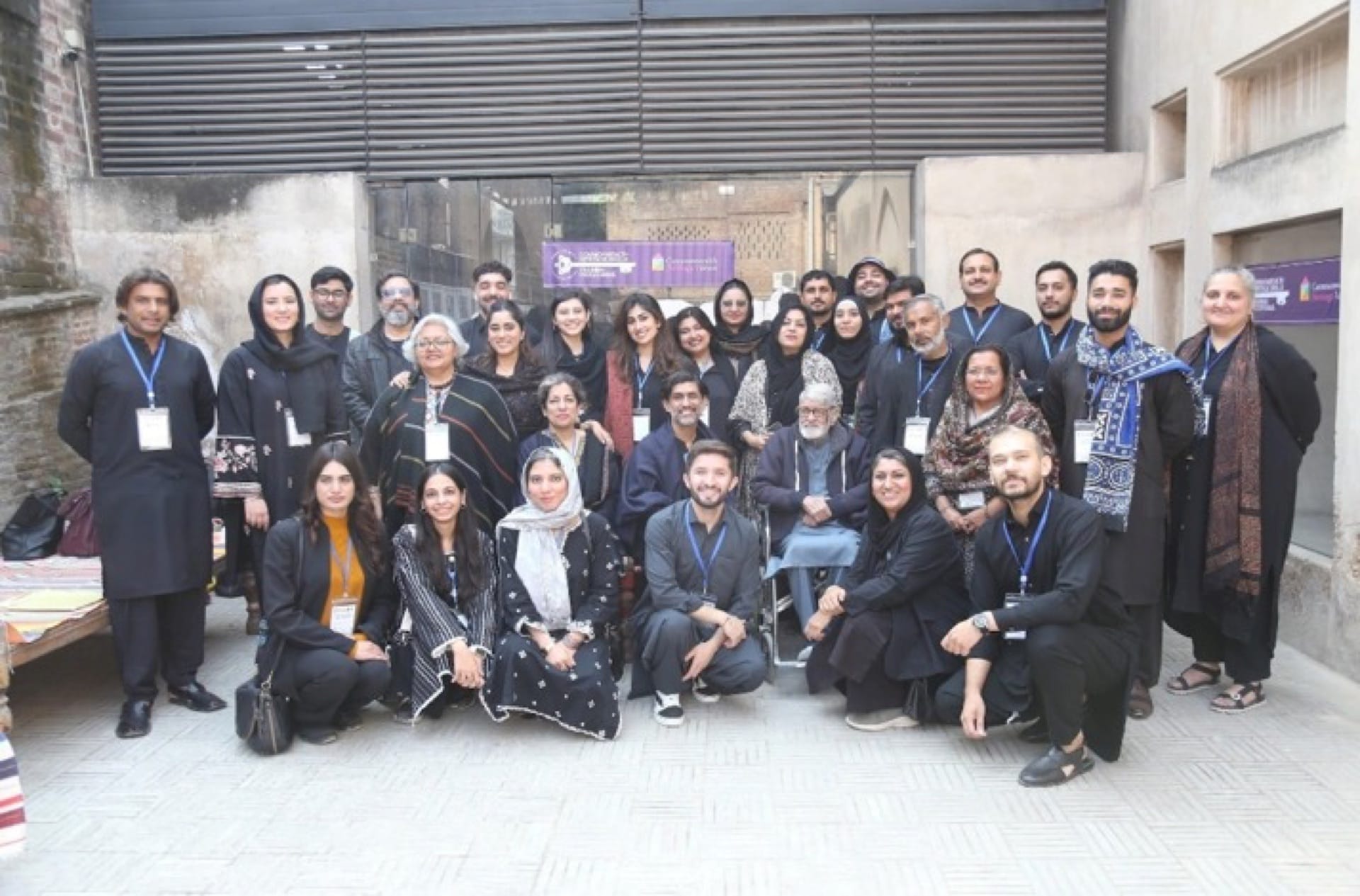
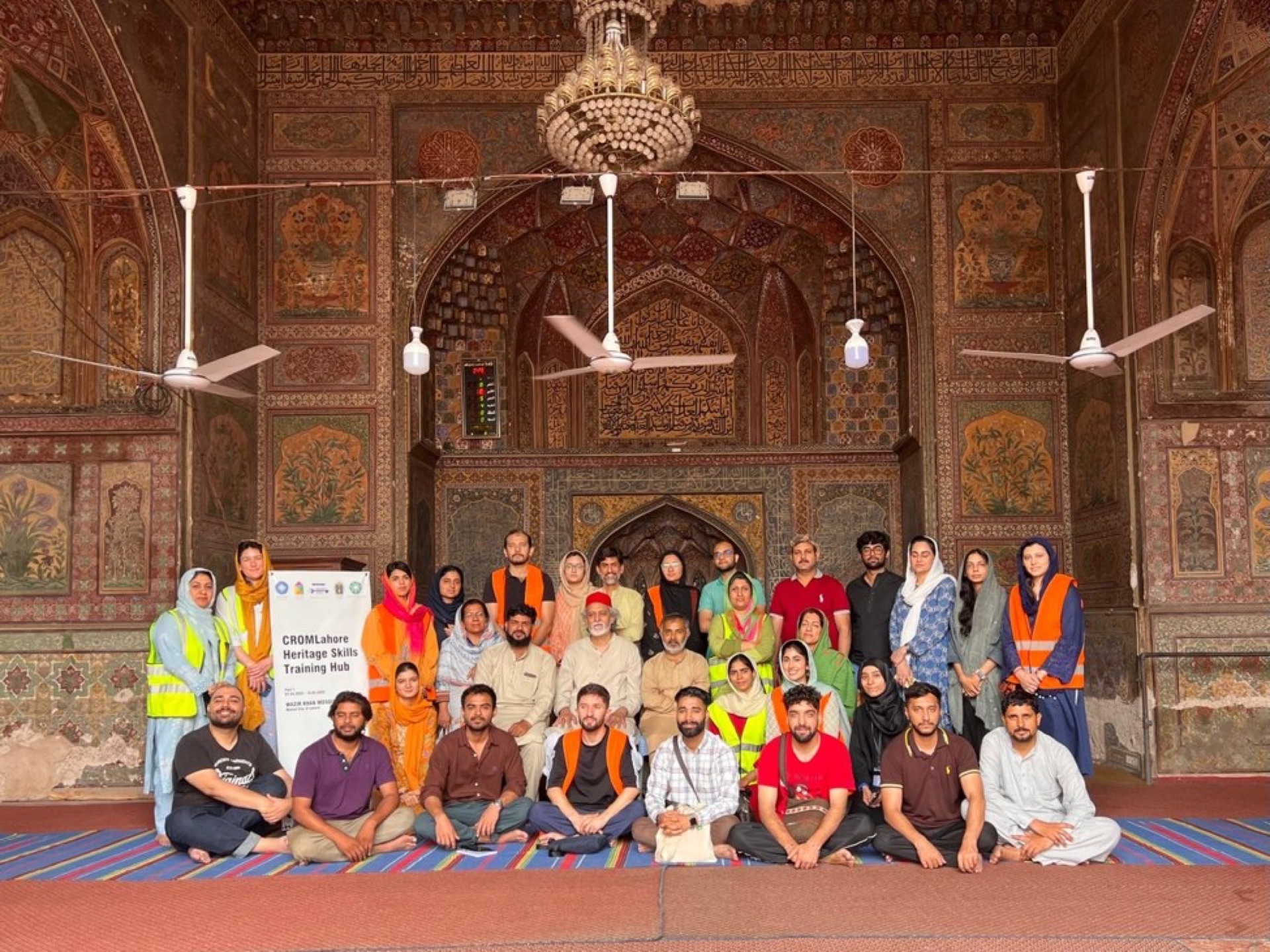
A total of 30 participants took part in the workshop, which was structured across two parts.
Workshop — Part 1
Traditional Craft Techniques and Foundational Training
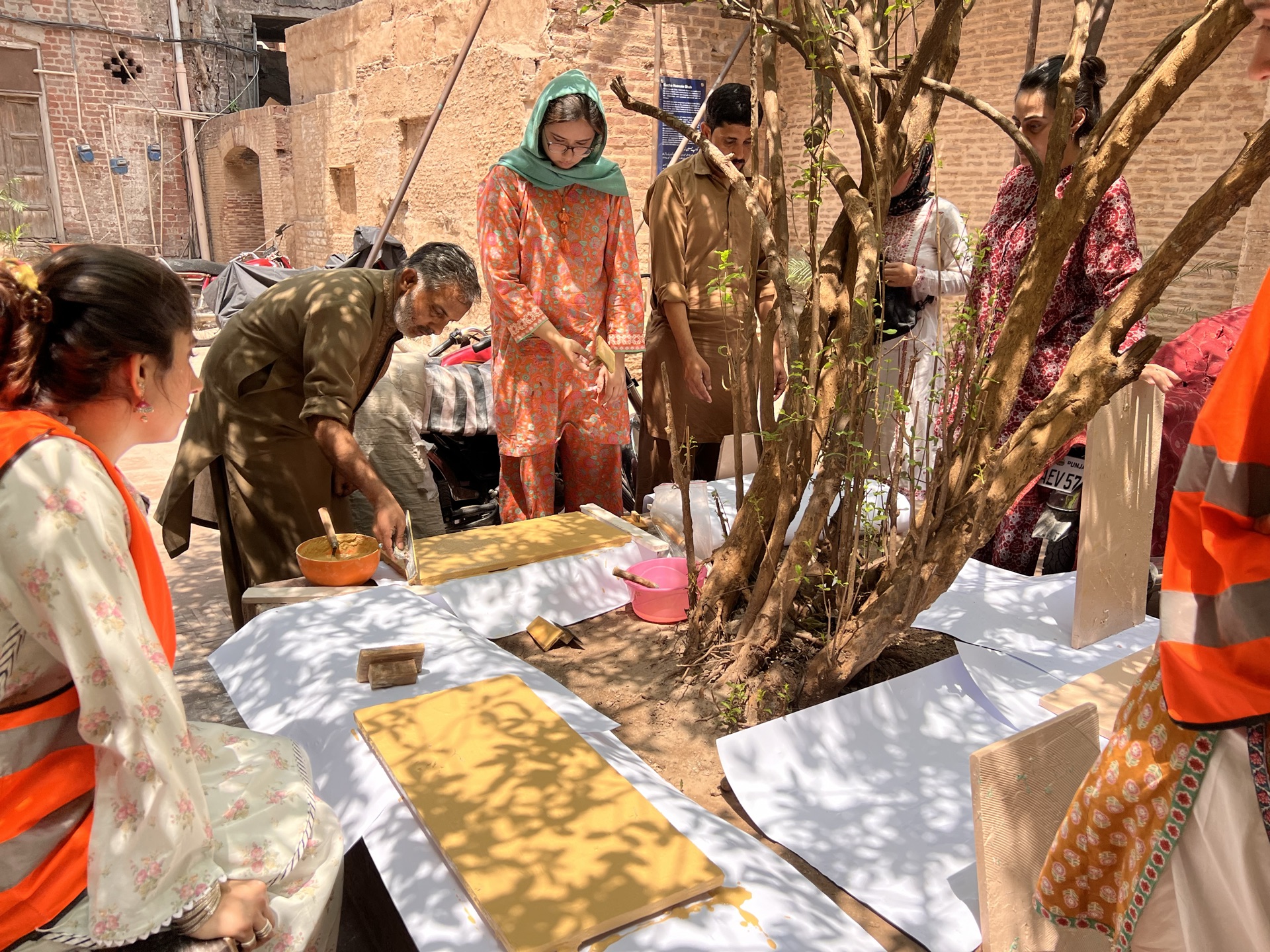
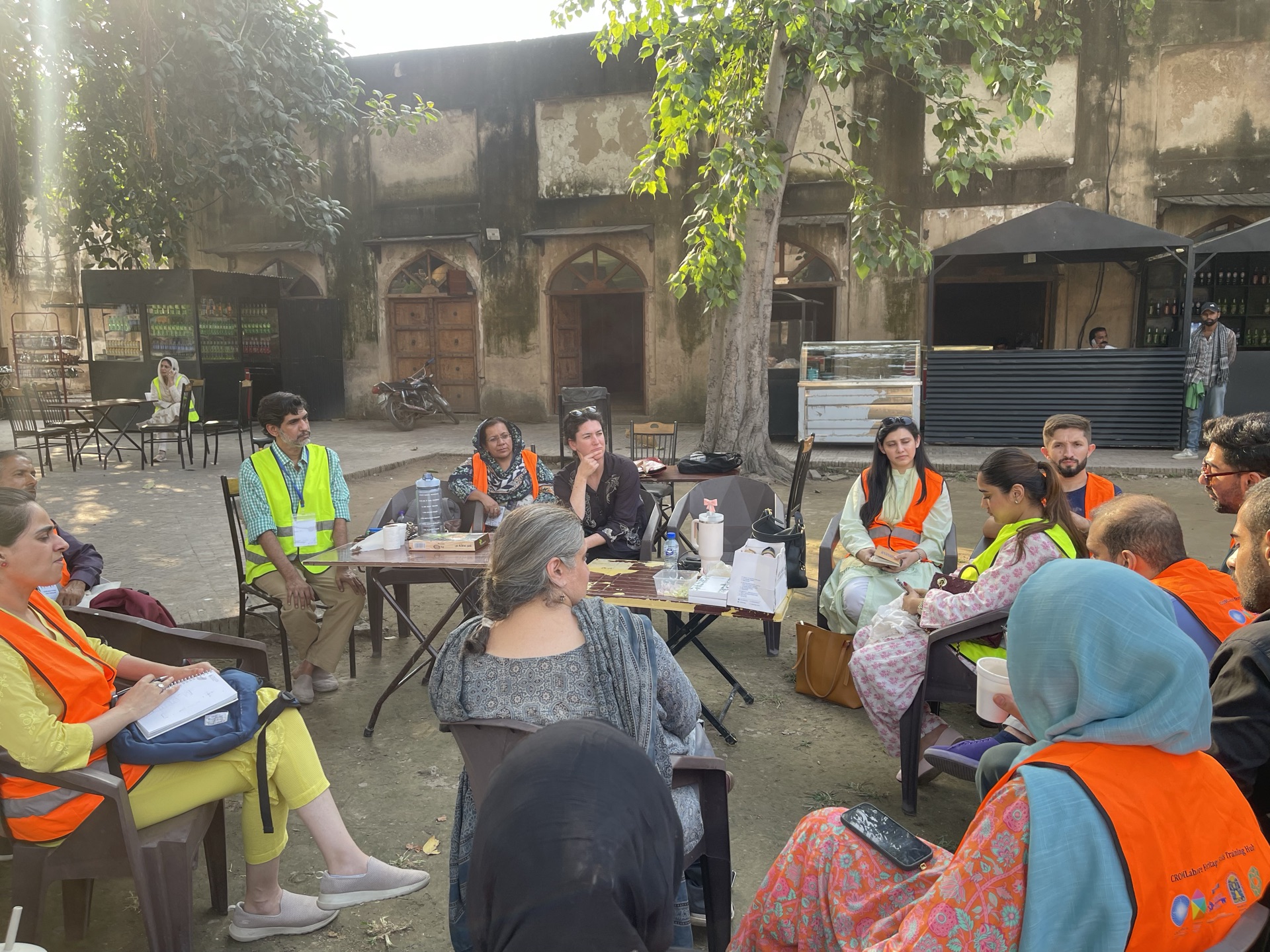
Phase One was designed to establish a strong grounding in traditional restoration practices through a combination of theoretical input, live demonstrations, and closely guided instruction. Participants were introduced to the historical context, material philosophy, and technical discipline underpinning heritage conservation practices.
During this phase, participants were trained in:
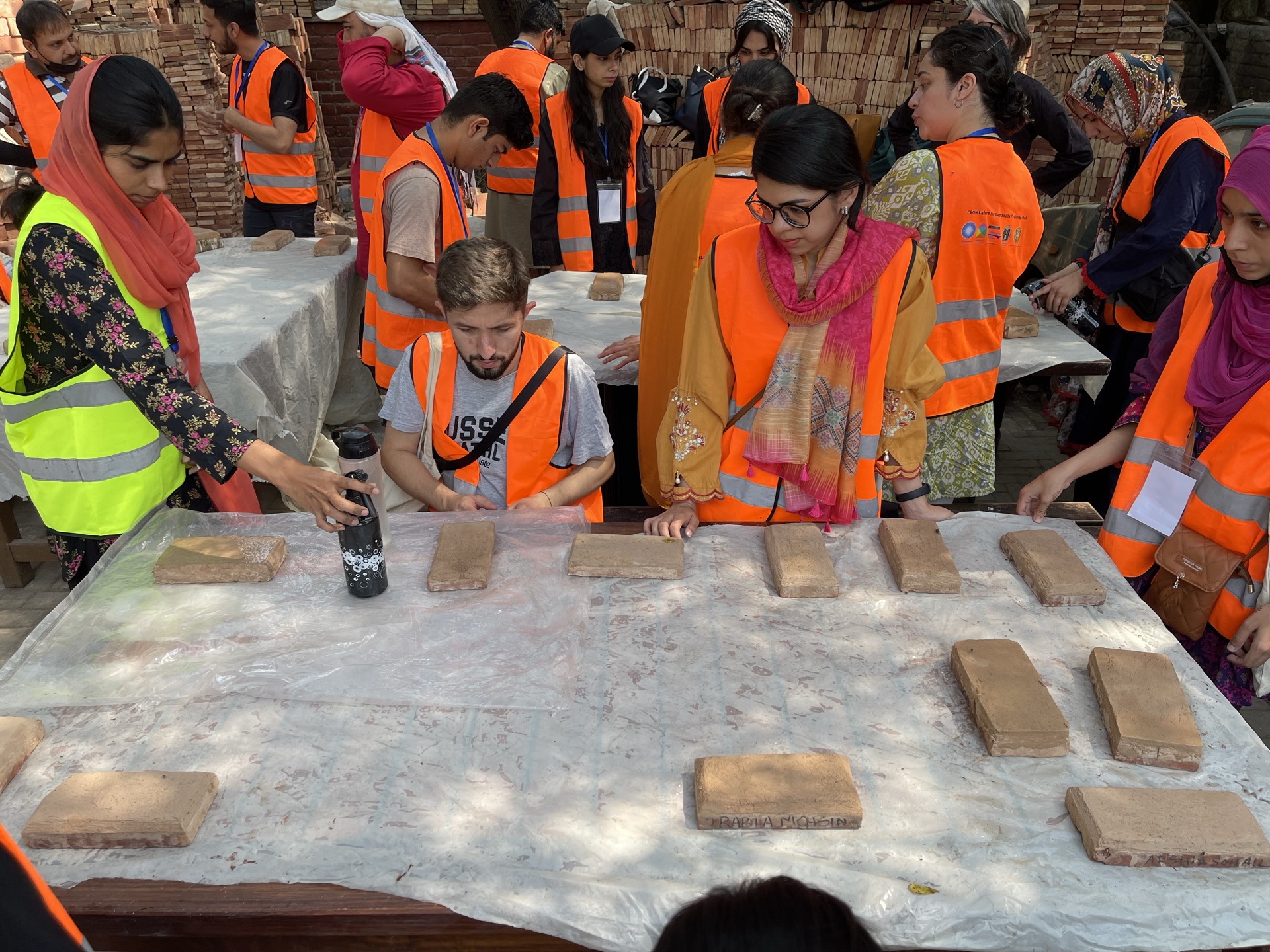
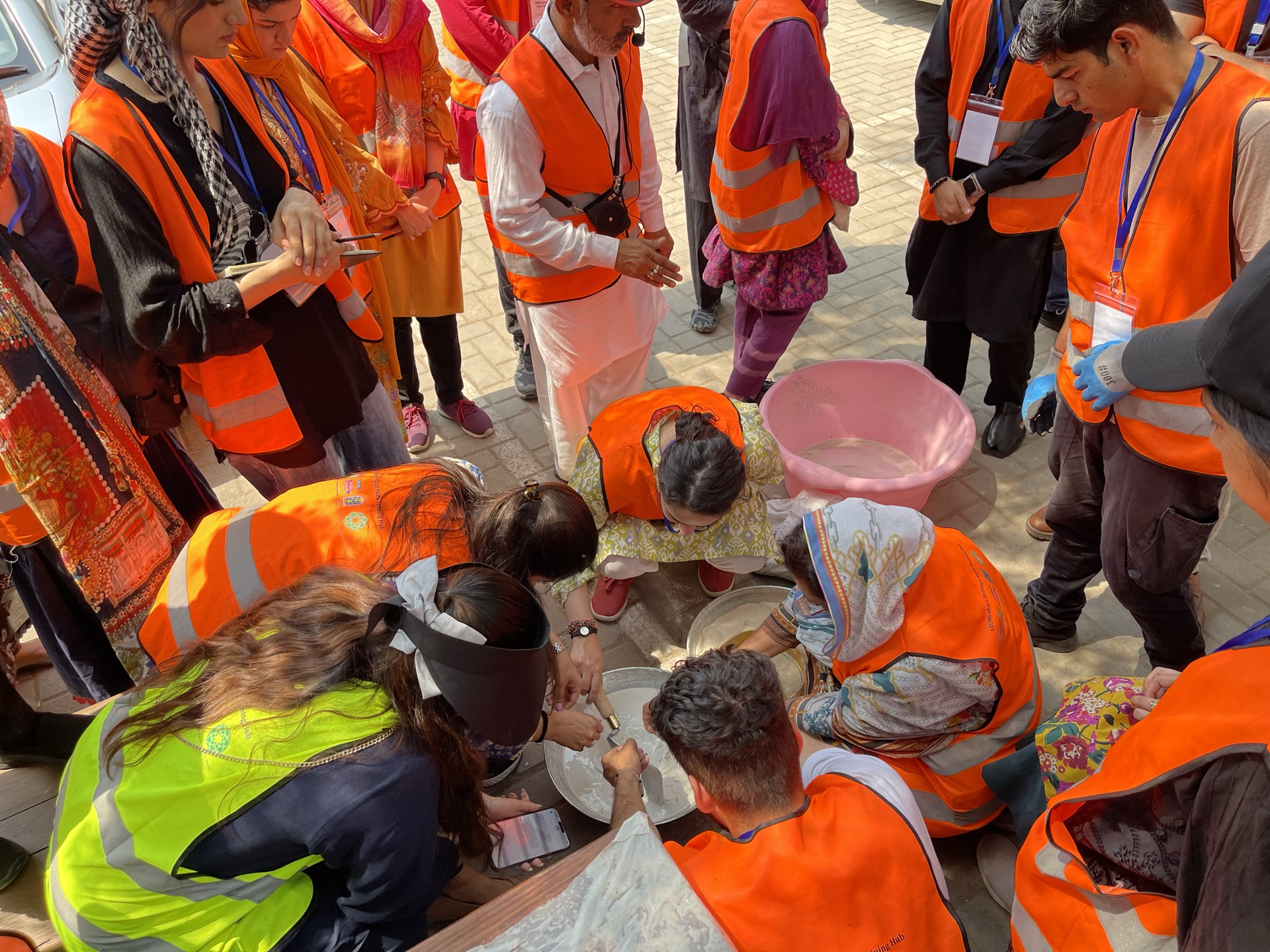
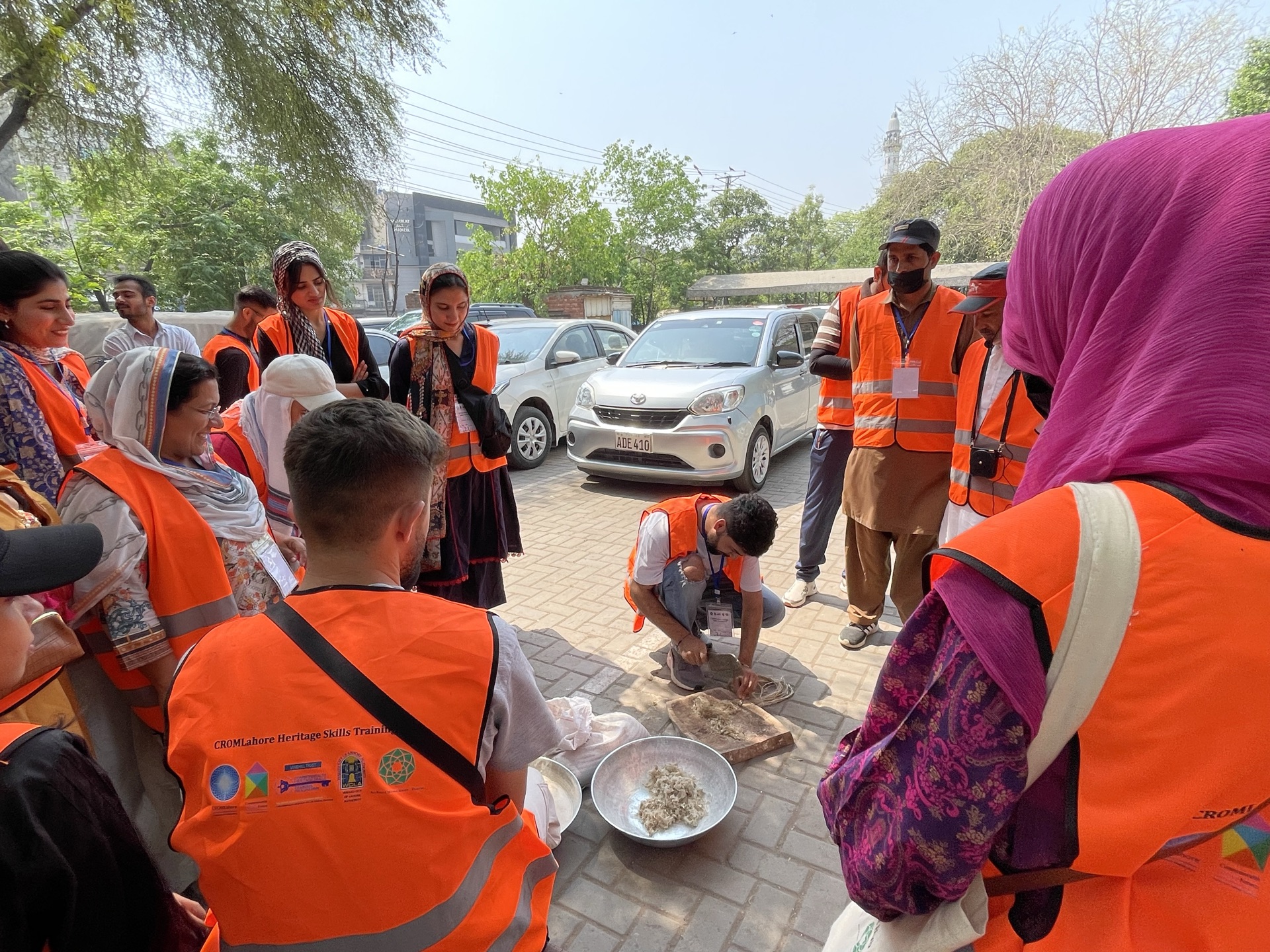
- Lime-based techniques, including material preparation, layering, curing, and an understanding of lime’s behaviour over time
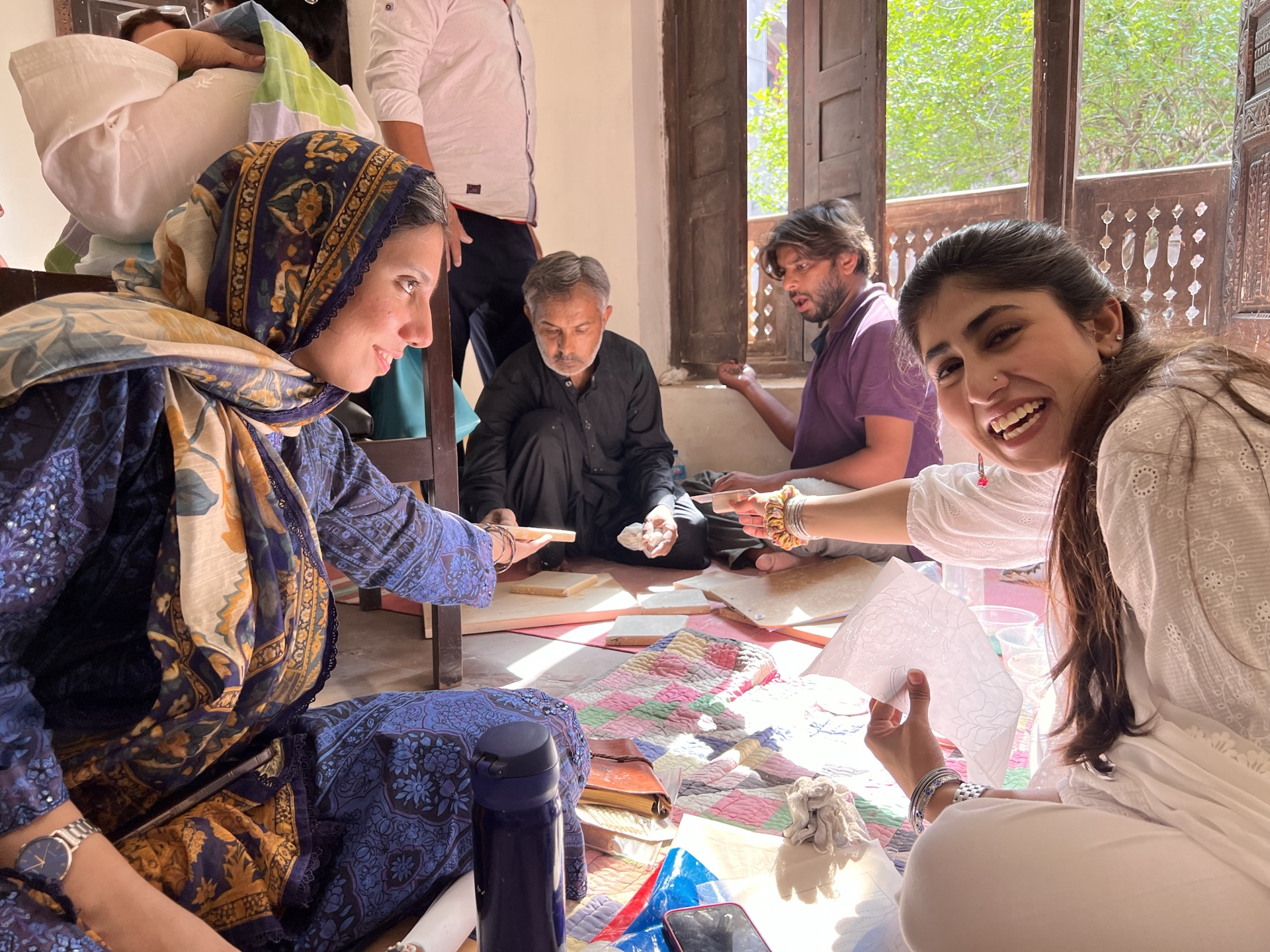
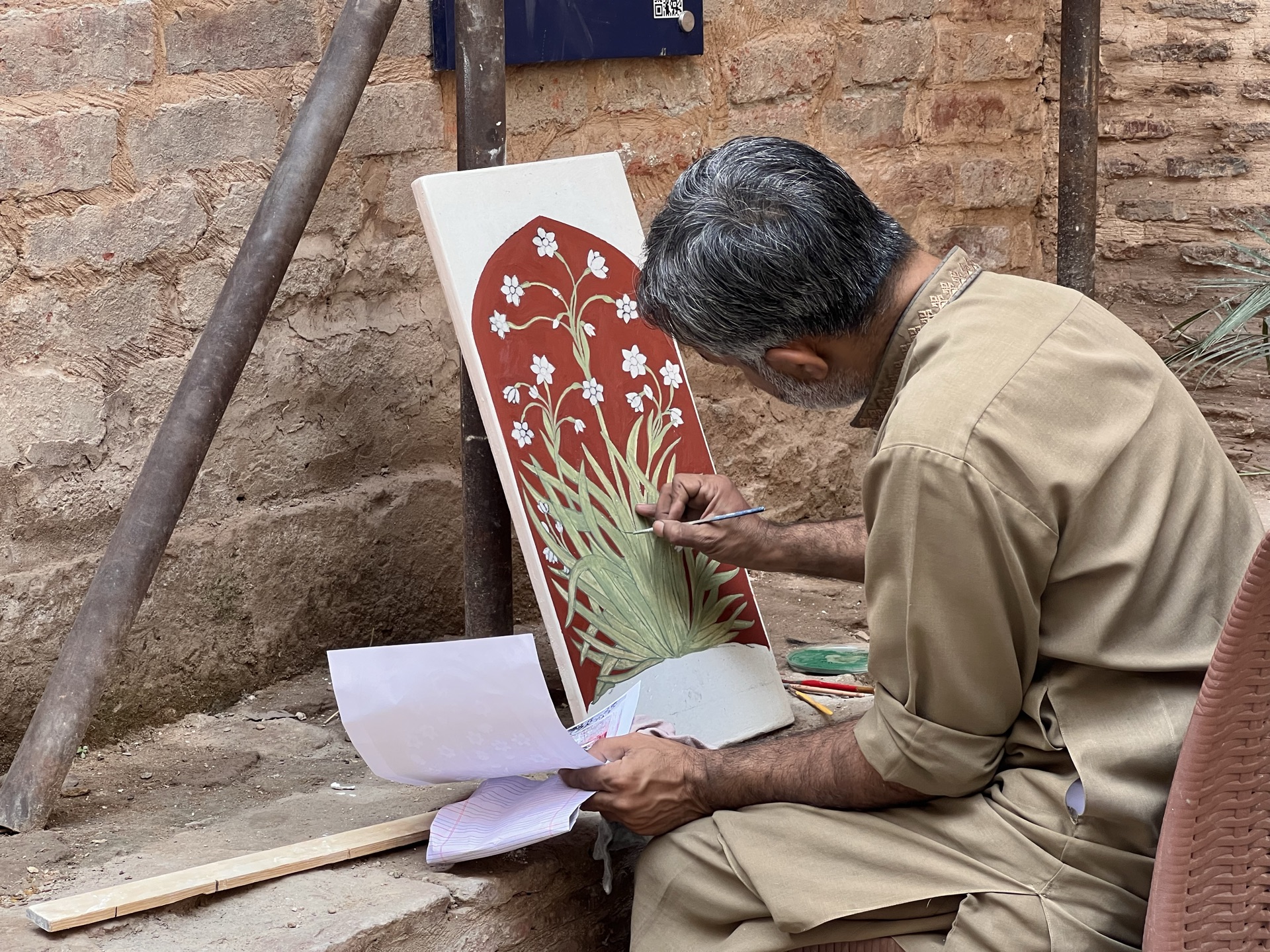
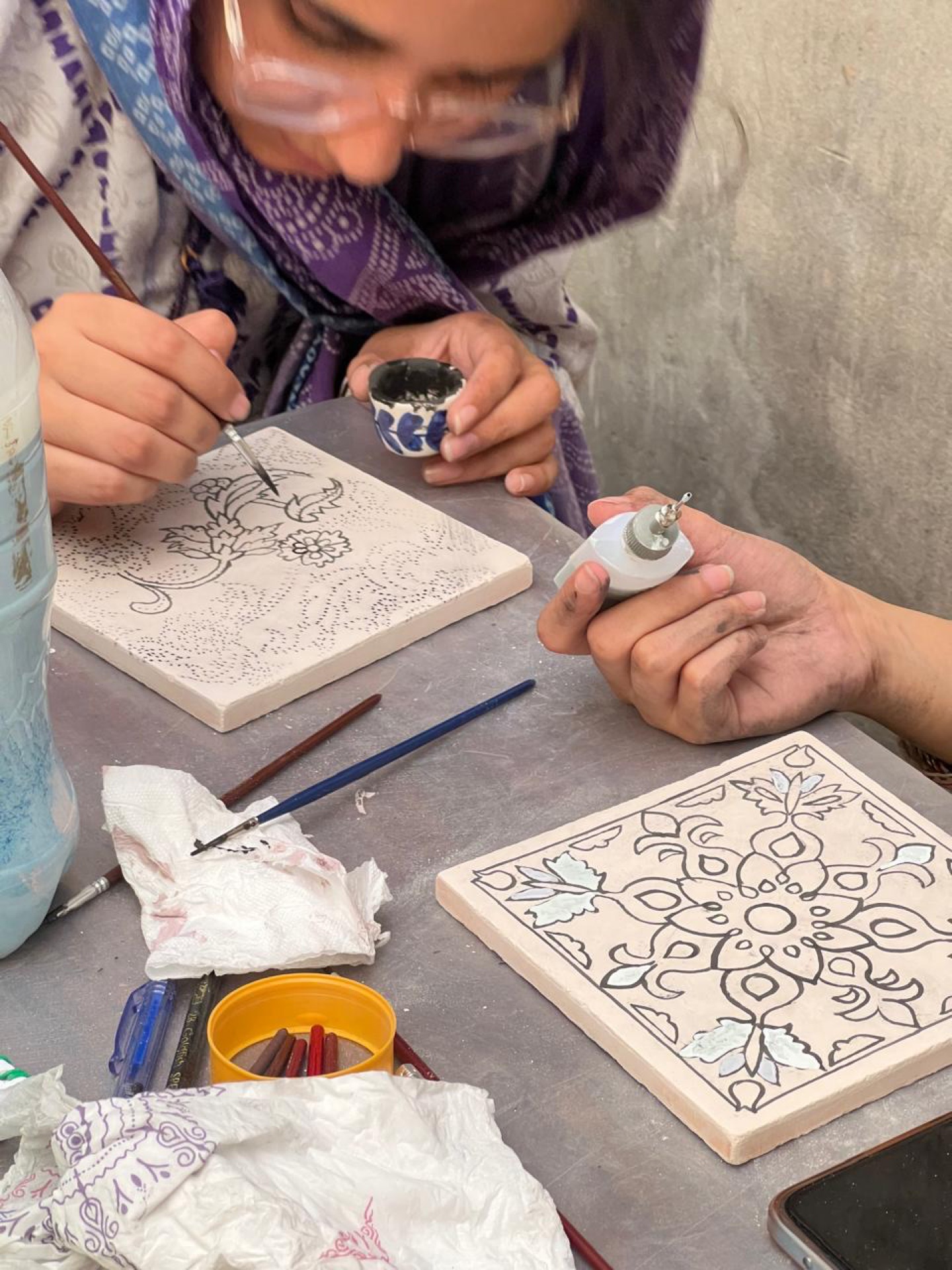
- Naqqashi techniques, focusing on line work, pigment preparation, and traditional compositional principles
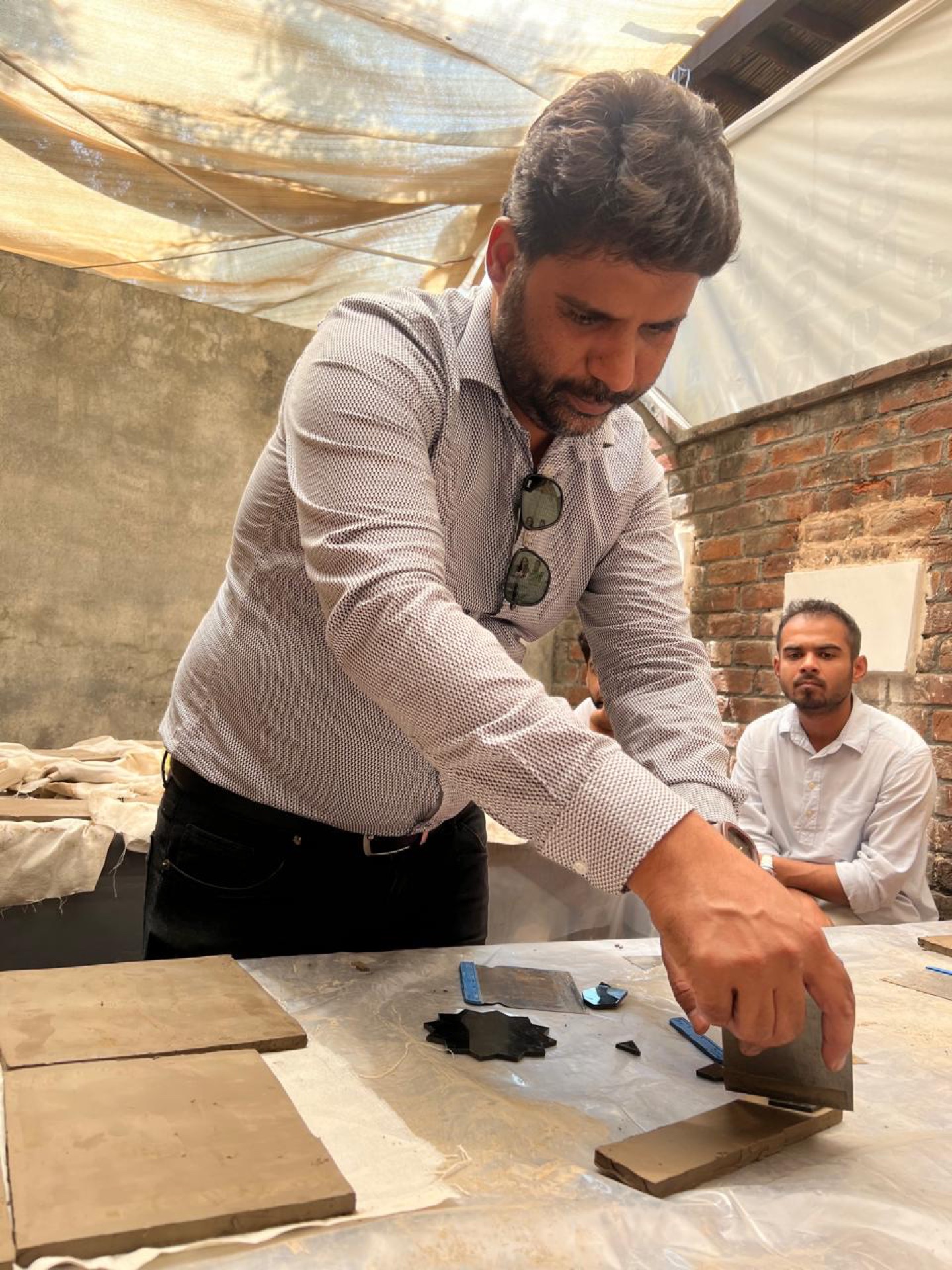
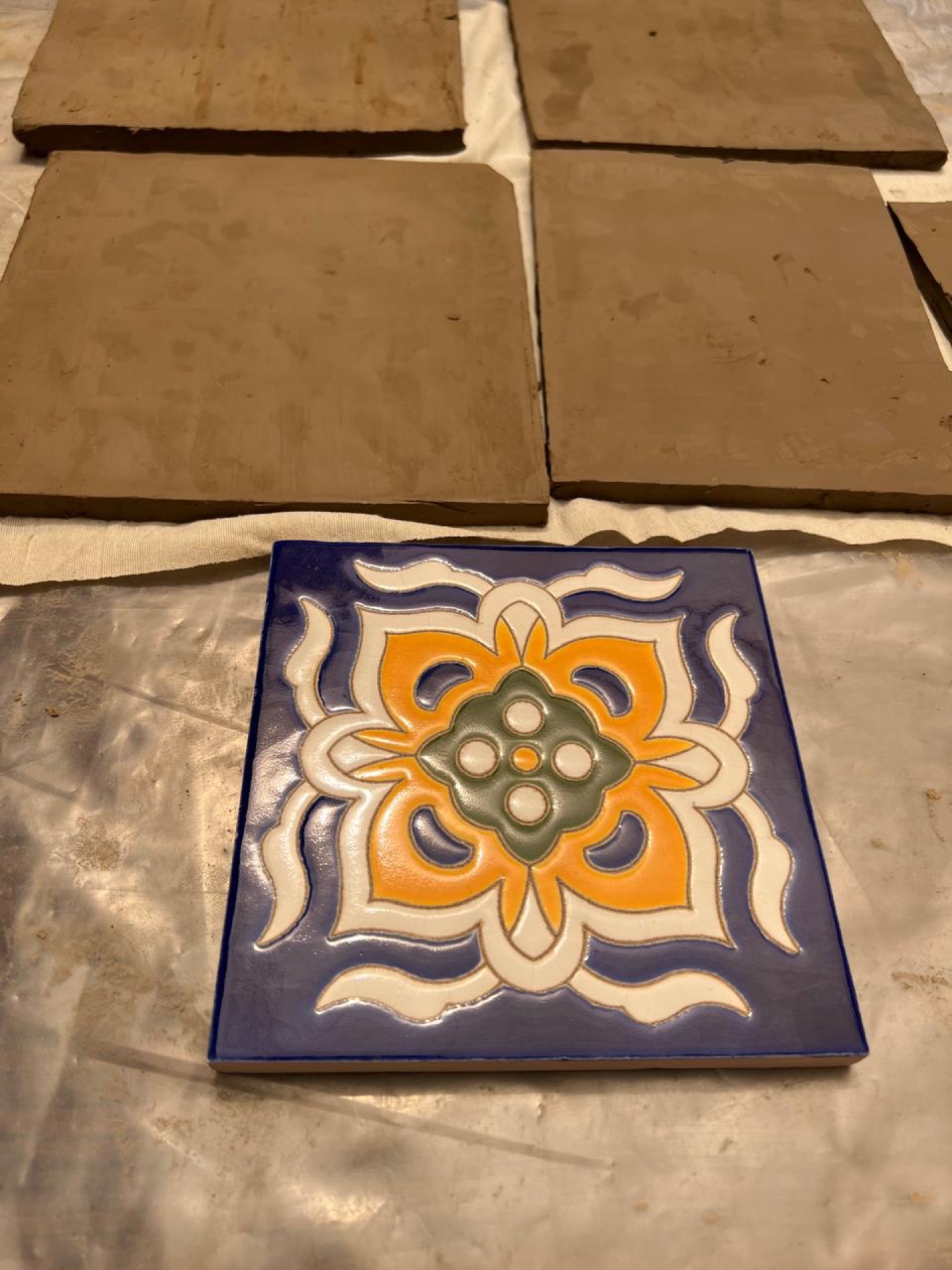
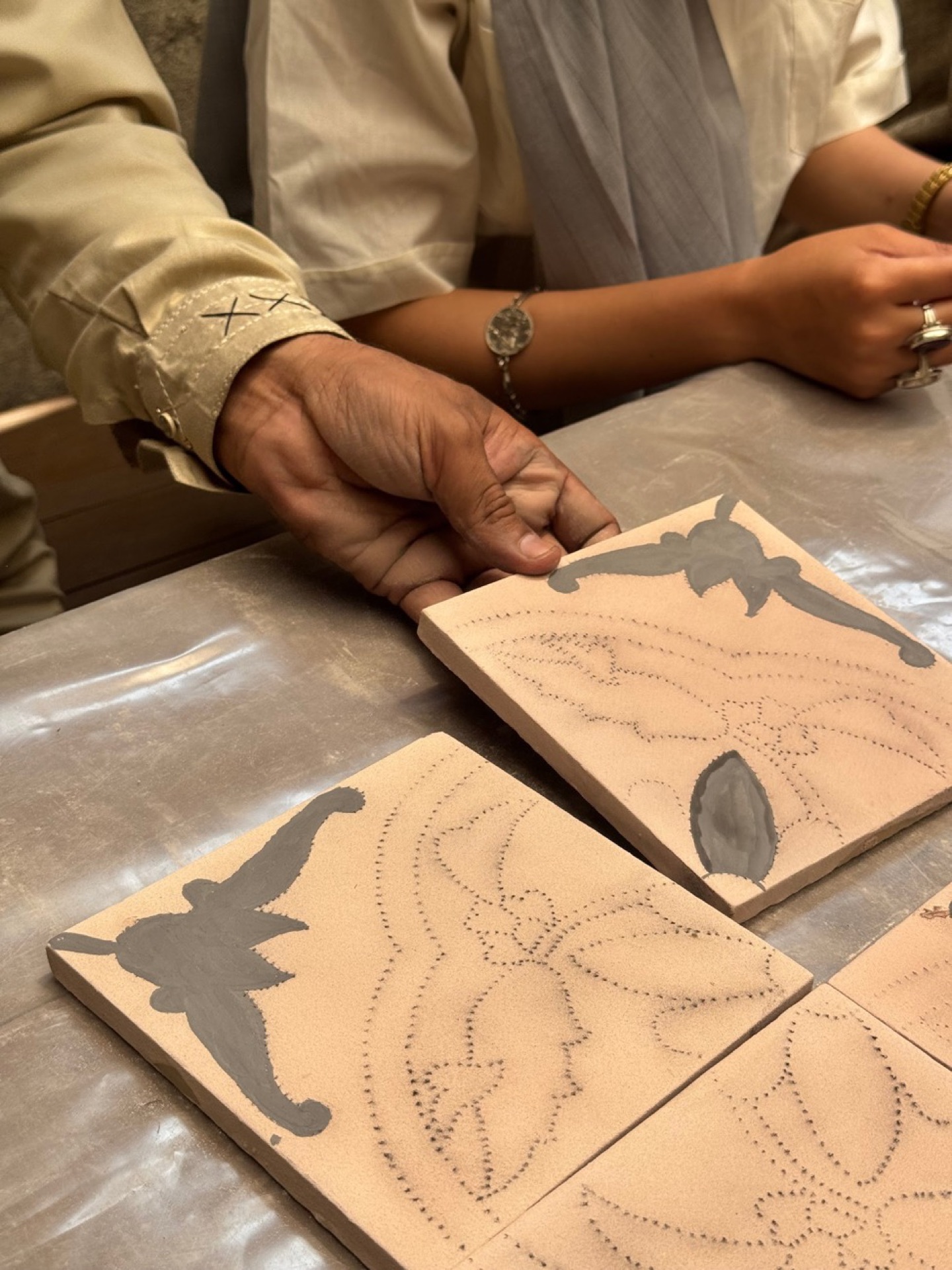
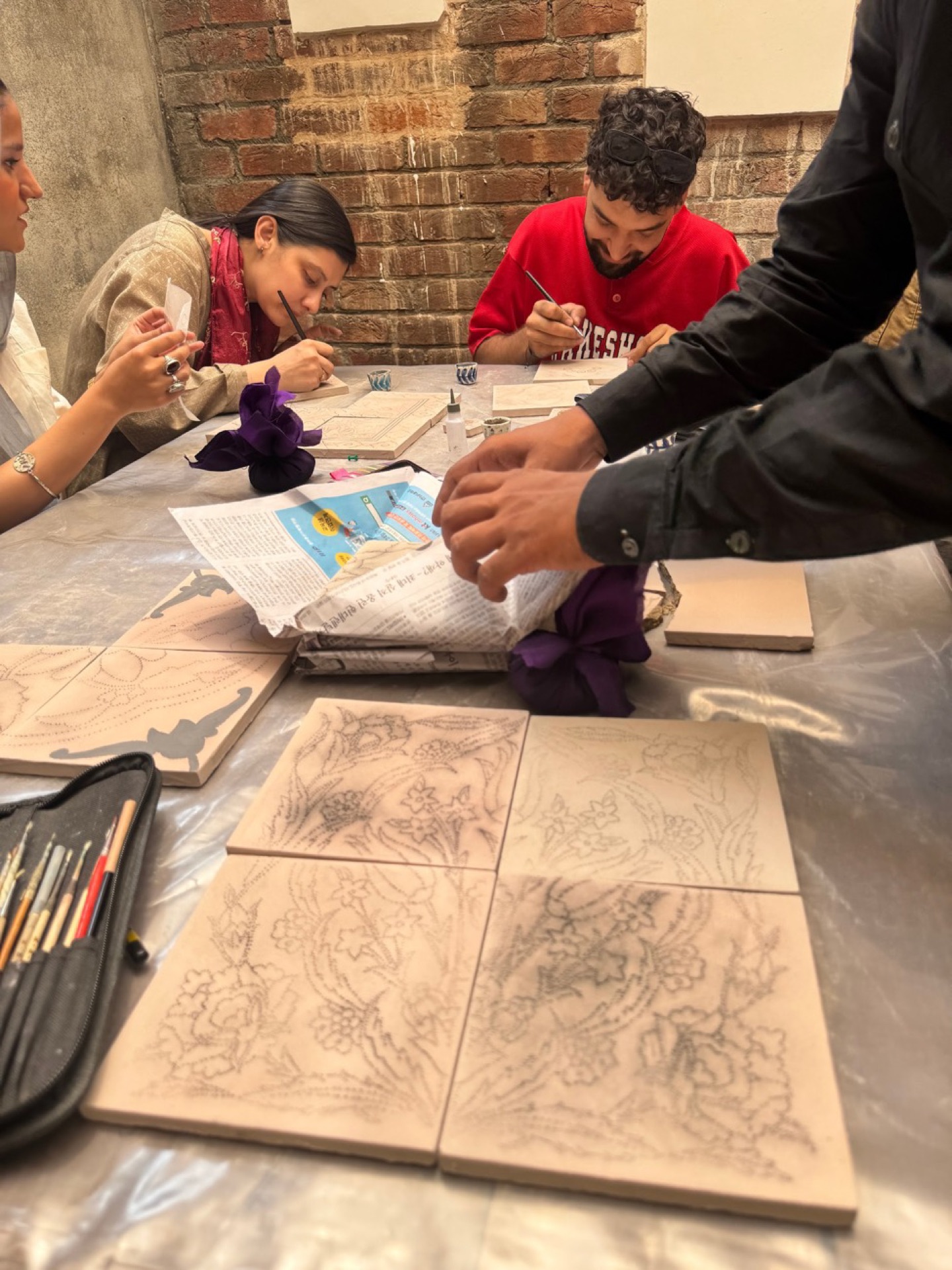
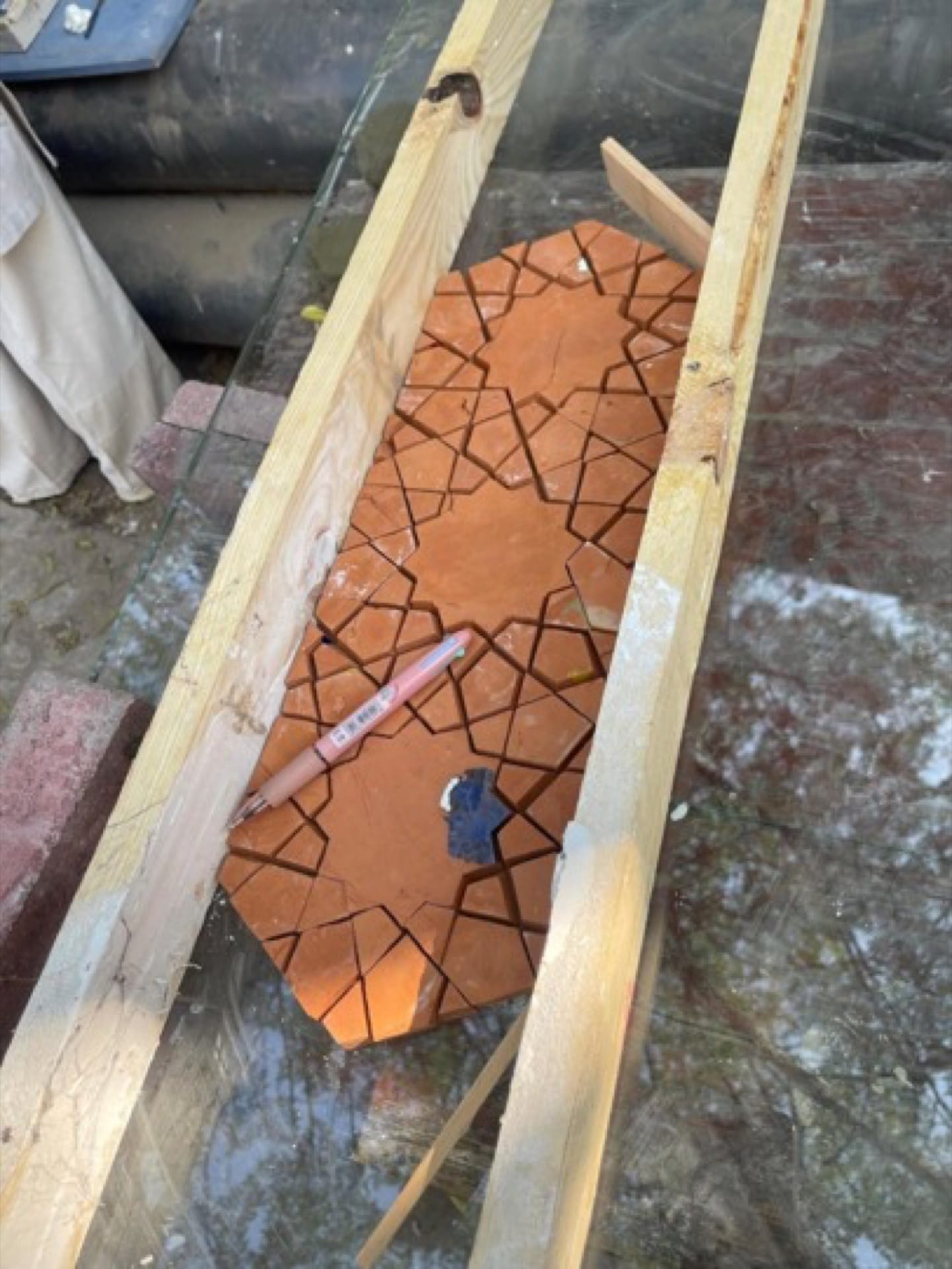
- Kashi Kari techniques, covering tile preparation, glazing processes, colour application, and firing considerations
Emphasis was placed on understanding traditional materials—their sources, properties, and limitations—as well as correct surface preparation and sequencing of processes. This phase aimed to cultivate material sensitivity and technical precision while grounding participants in the historical processes and ethical considerations central to conservation and restoration work.
Lime
Naqqashi
Kashi Kari
Workshop — Part 2
Conservation Science and Advanced Applications
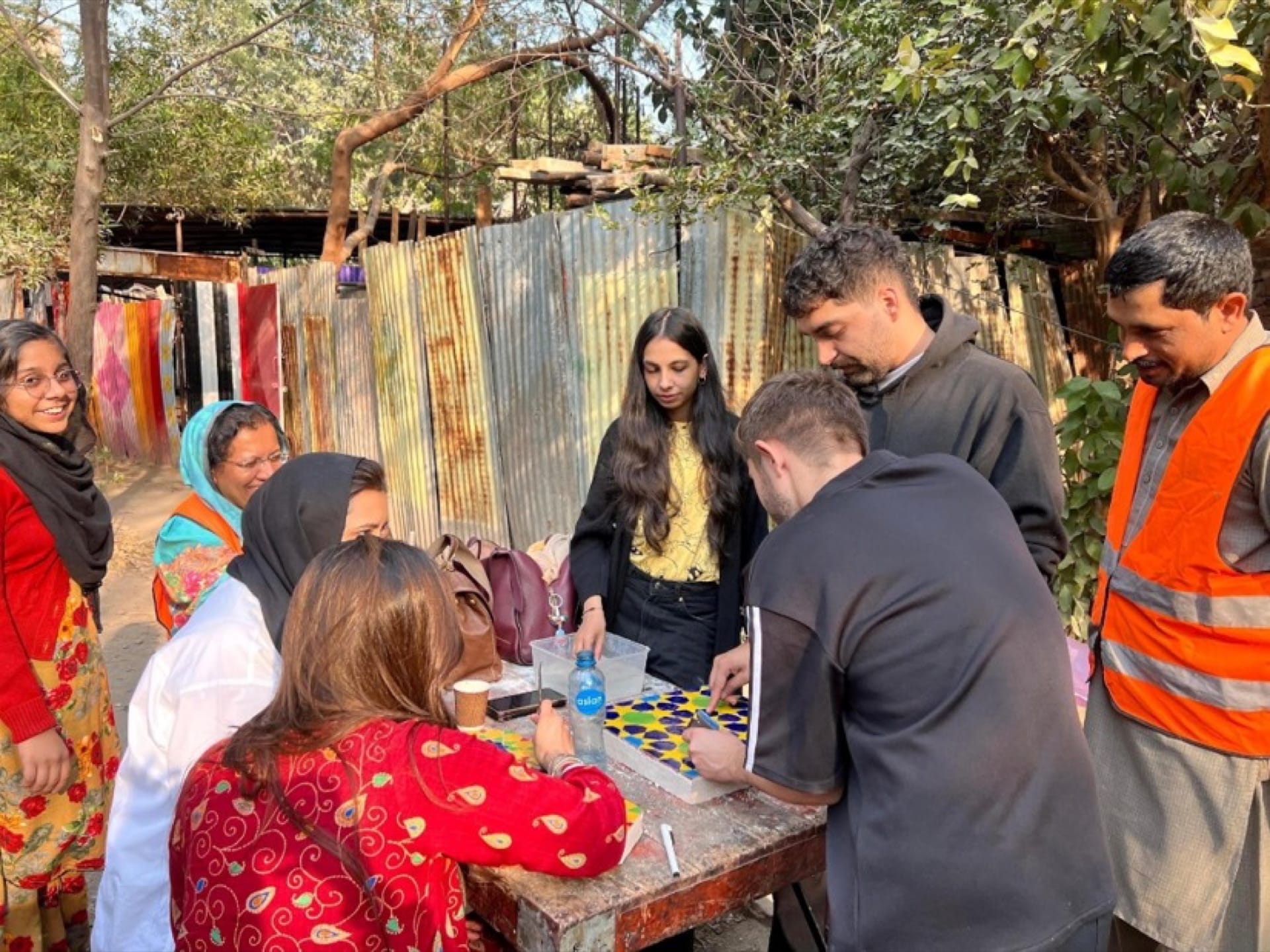
Phase Two shifted focus from instruction to application, allowing participants to translate their foundational knowledge into practical execution. Participants worked collaboratively on on-scale group panels under expert supervision, encouraging problem-solving, peer learning, and an understanding of best practice conservation principles and workflow within a shared conservation task.
During this phase, participants were trained in:
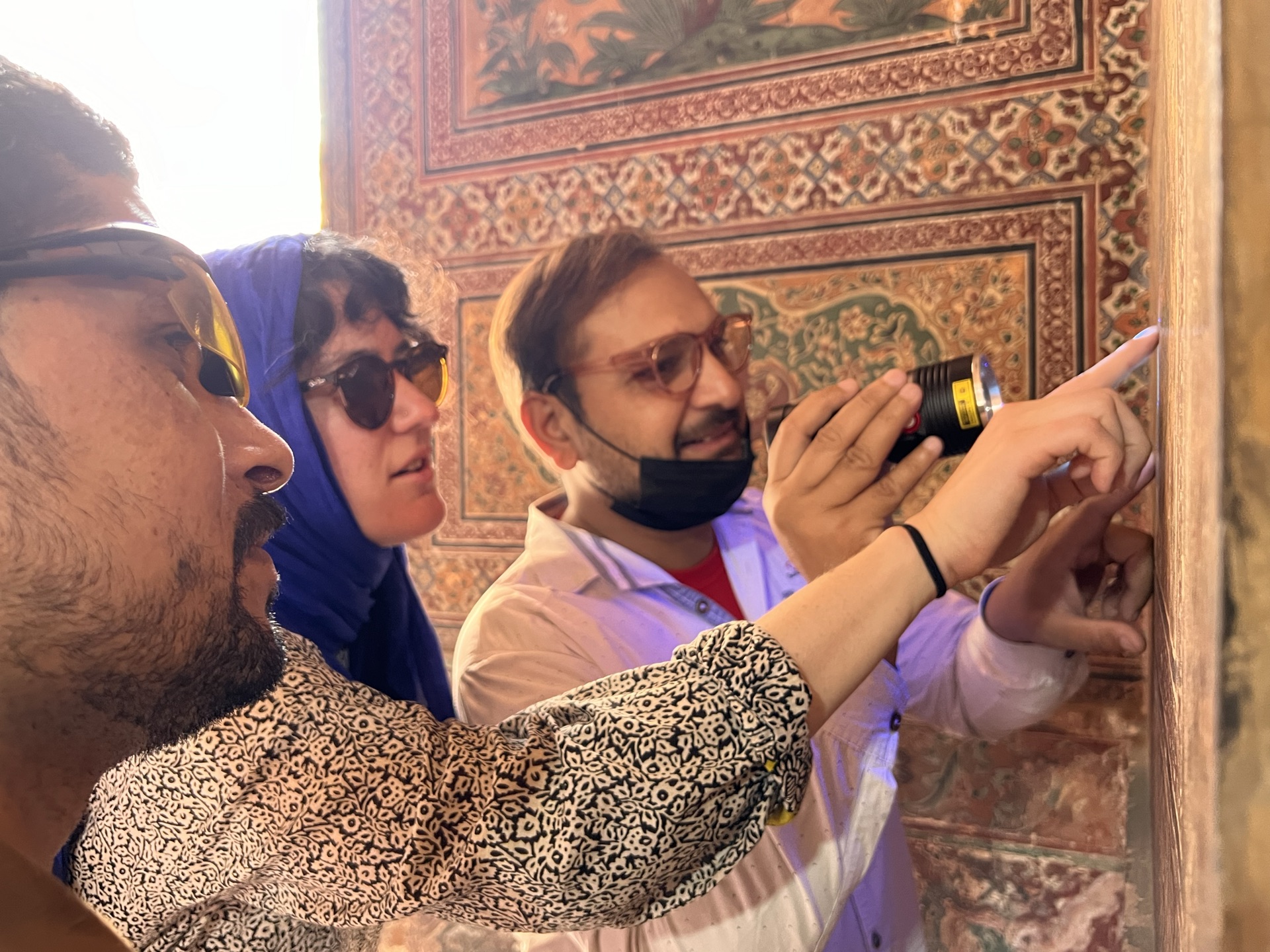
- Advanced Naqqashi Conservation Techniques, including UV and infrared imaging for detecting subsurface features, digital restoration, and site-specific deterioration assessment
- Advanced Kashi Kari Techniques, including individual tile panel projects, glaze preparation, panel assembly, kiln firing, and quality evaluation
Emphasis was placed on translating theoretical knowledge into practical conservation work while maintaining respect for original materials, techniques, and ethical standards. This phase aimed to develop participants’ ability to assess, document, and intervene on historic surfaces with precision, sensitivity, and professional accountability.
Naqqashi
Kashi Kari
Site Visits
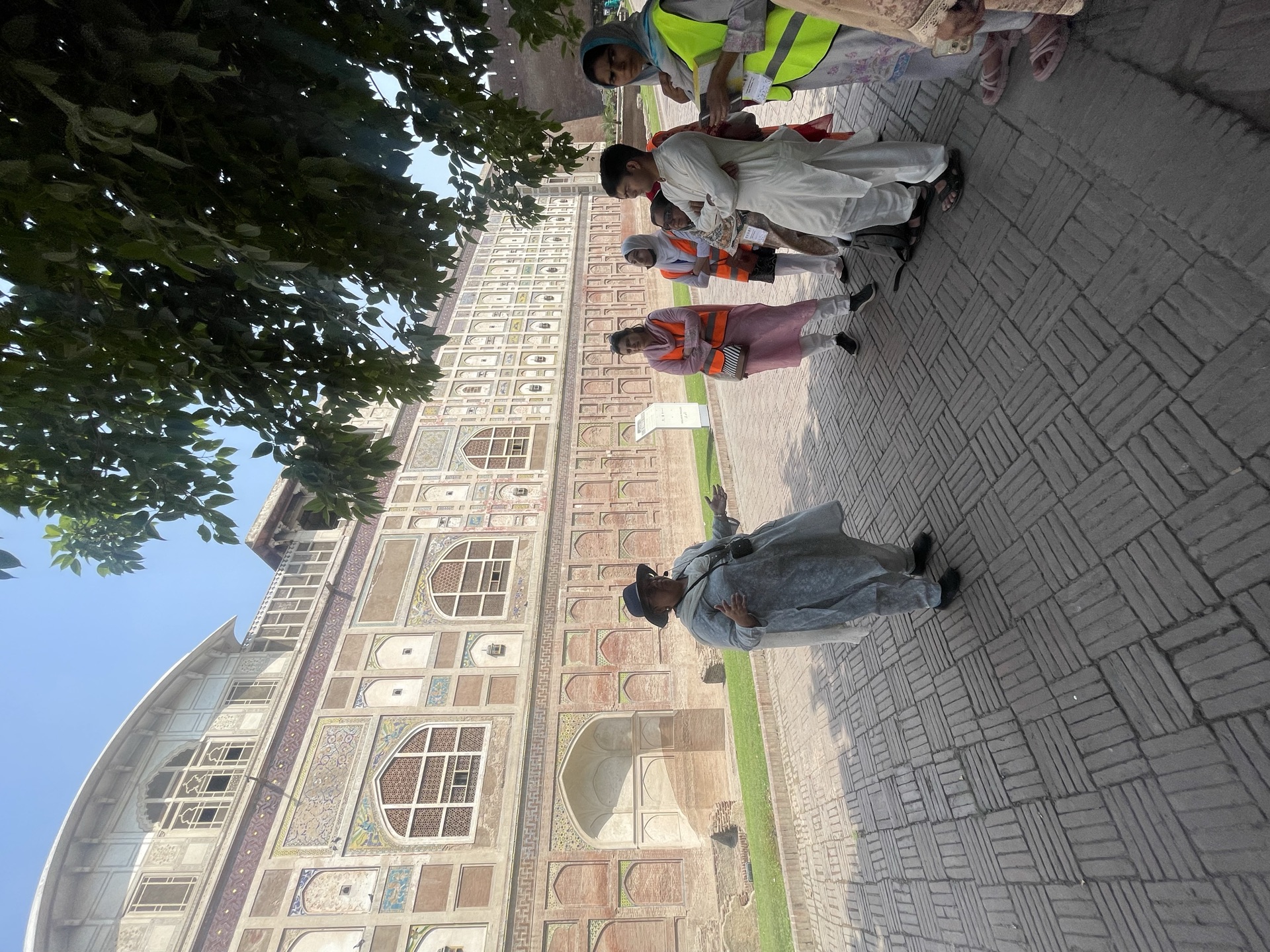
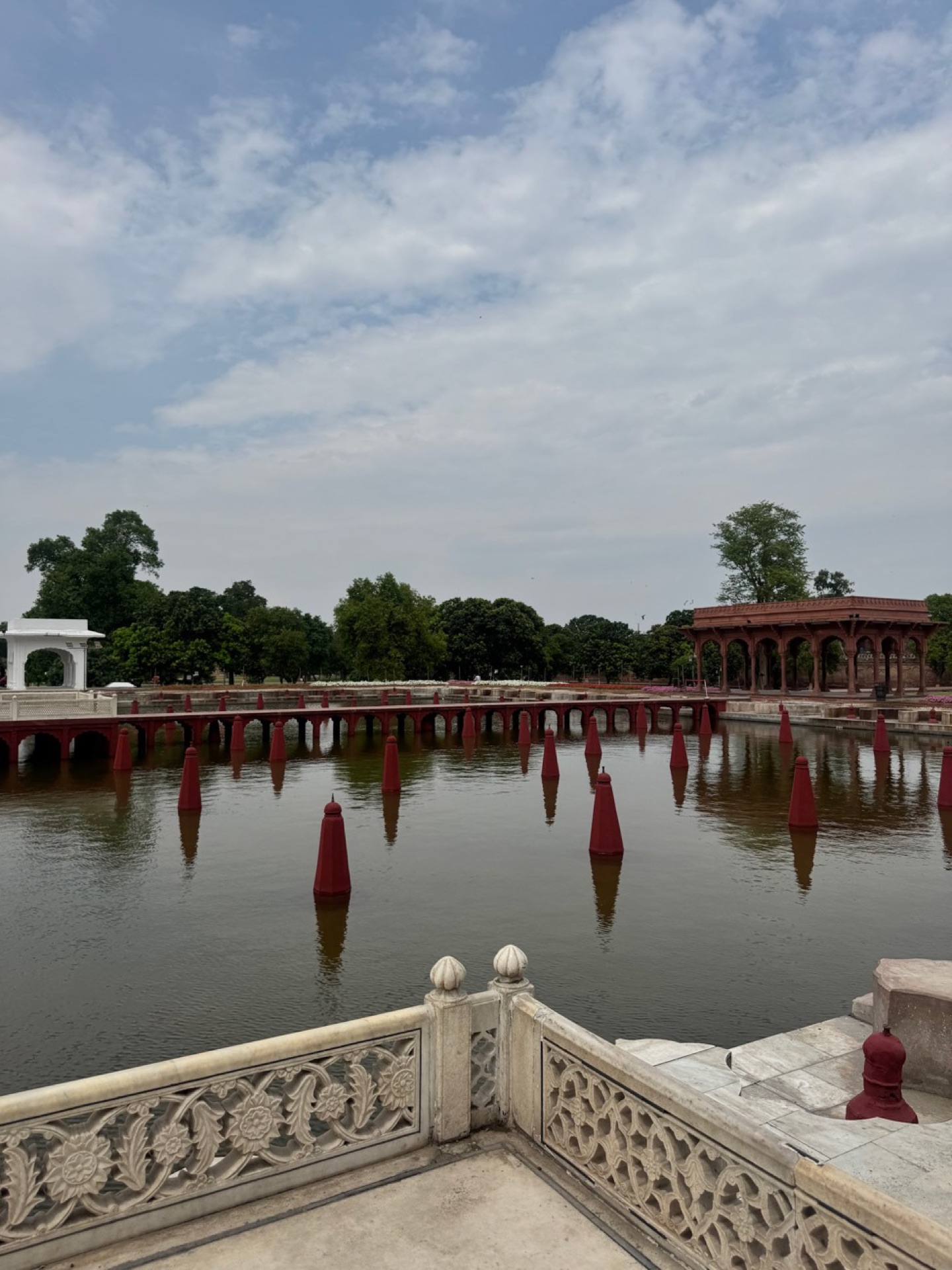
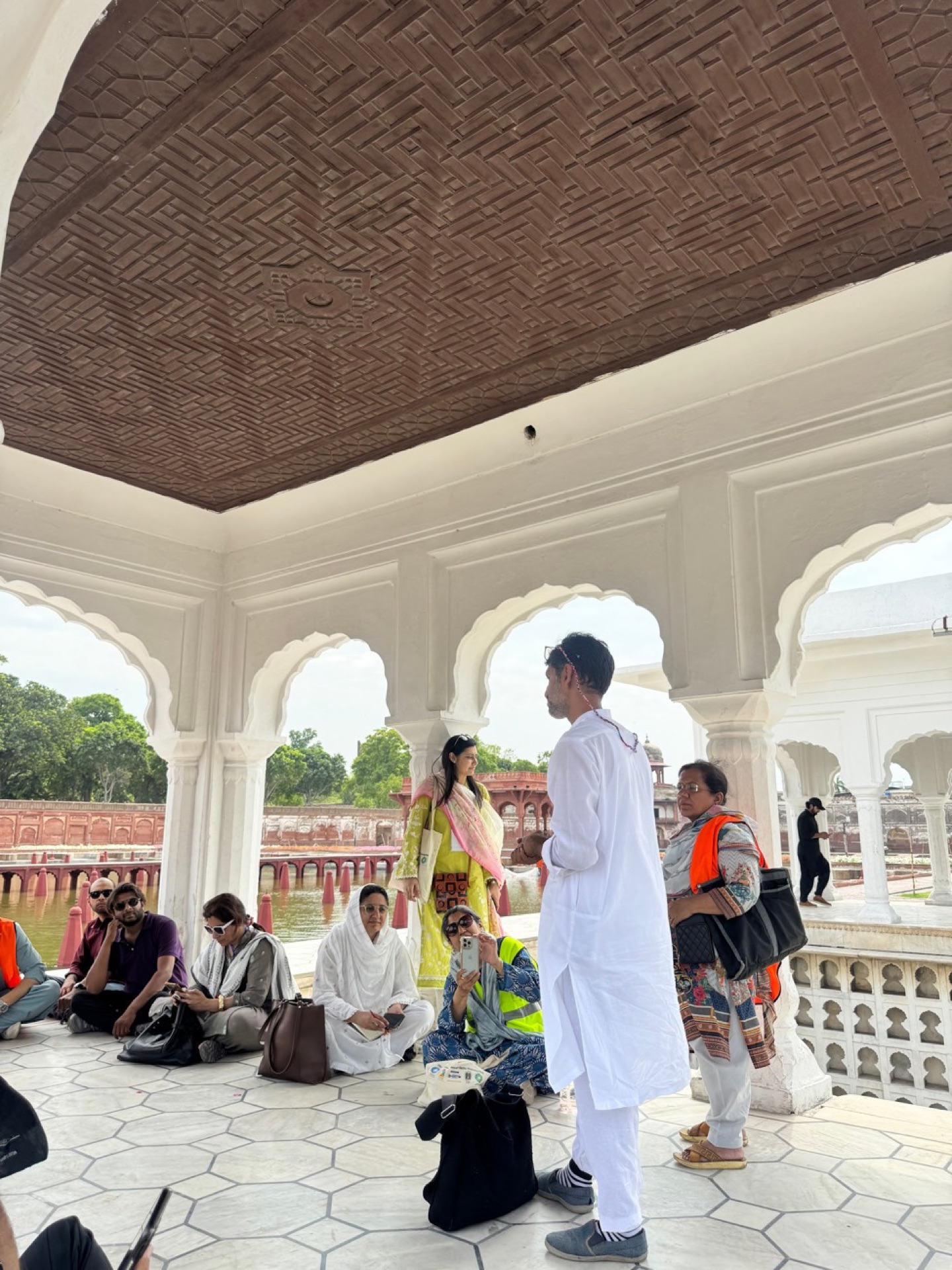
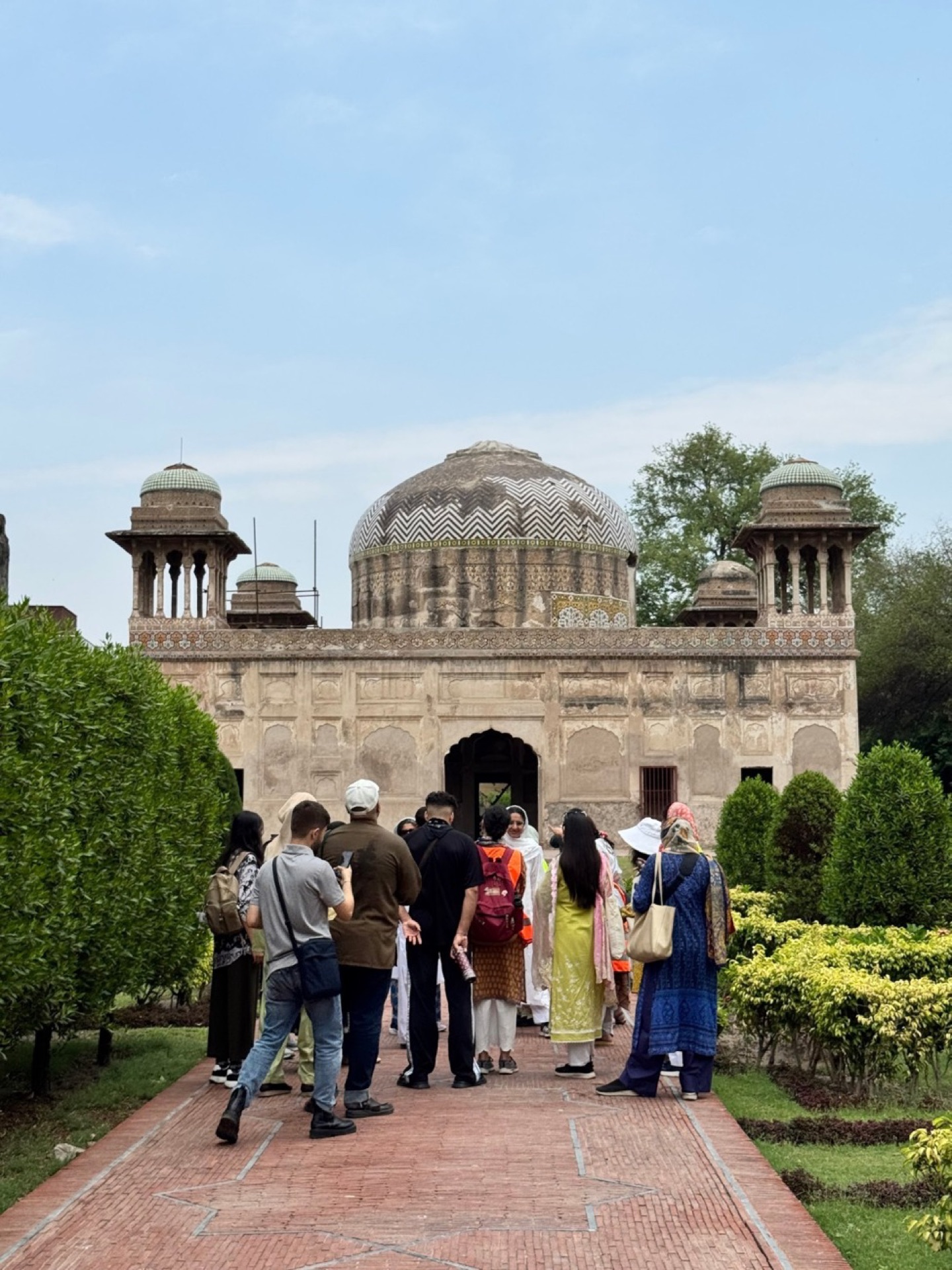
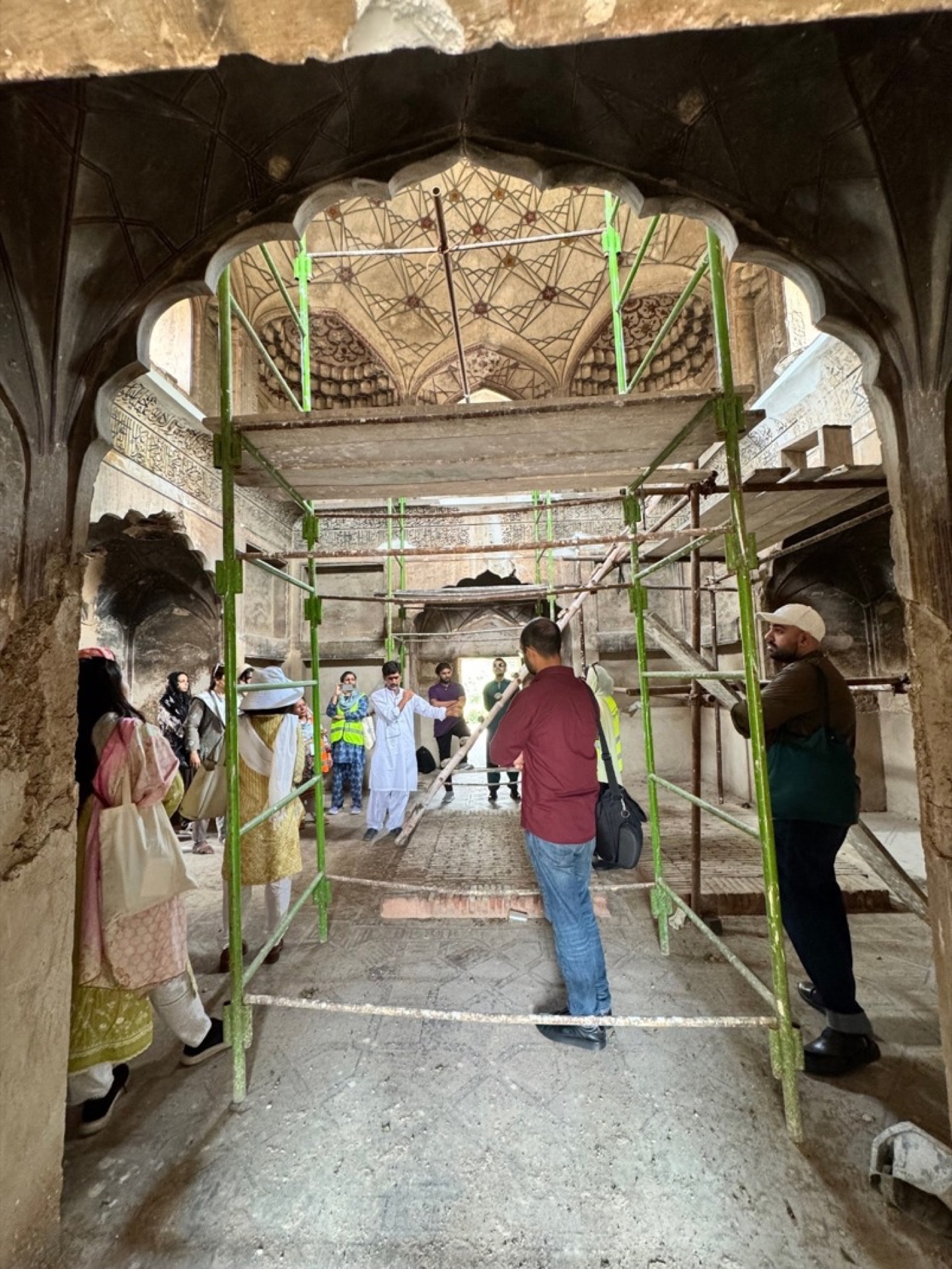
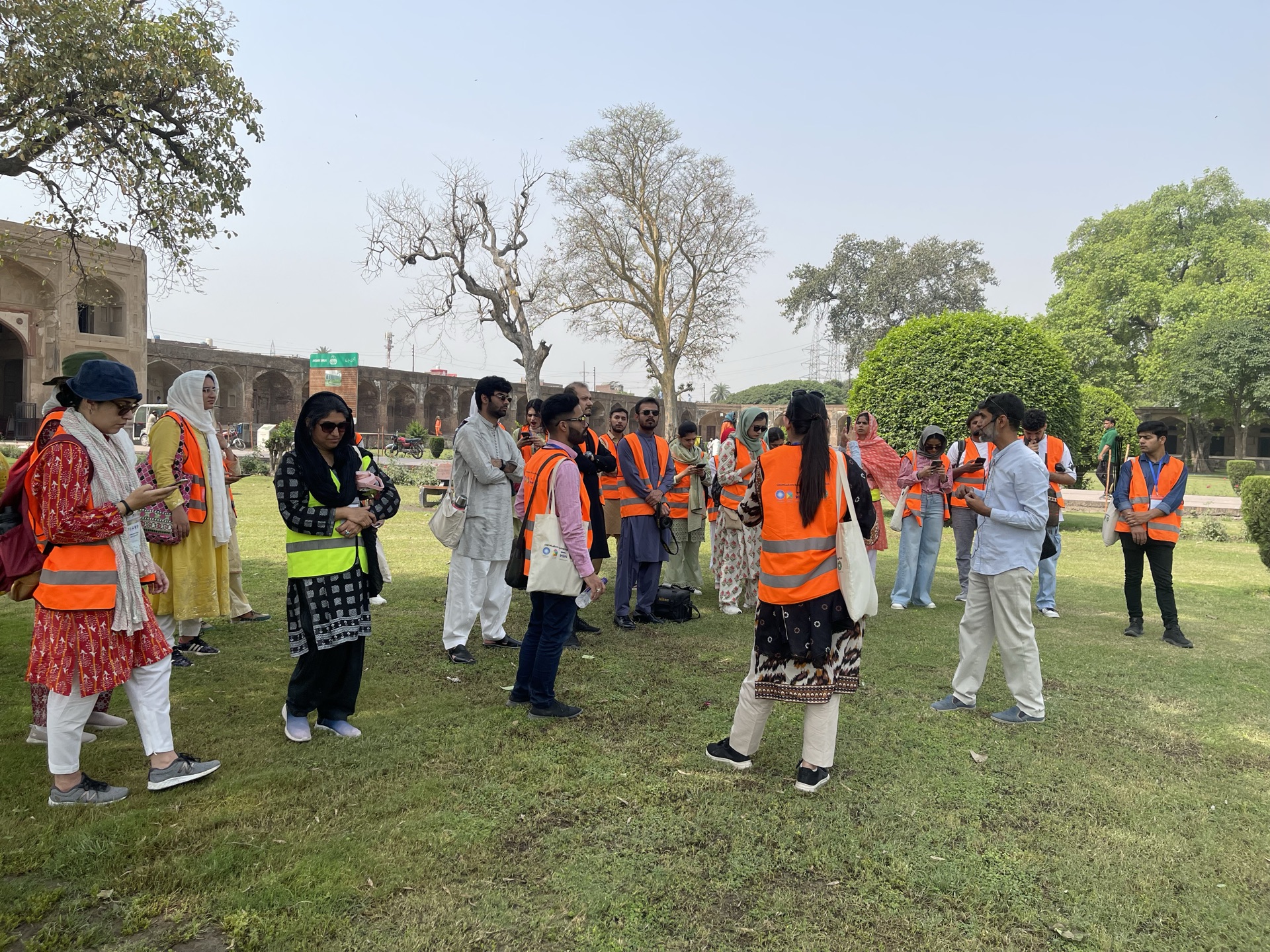
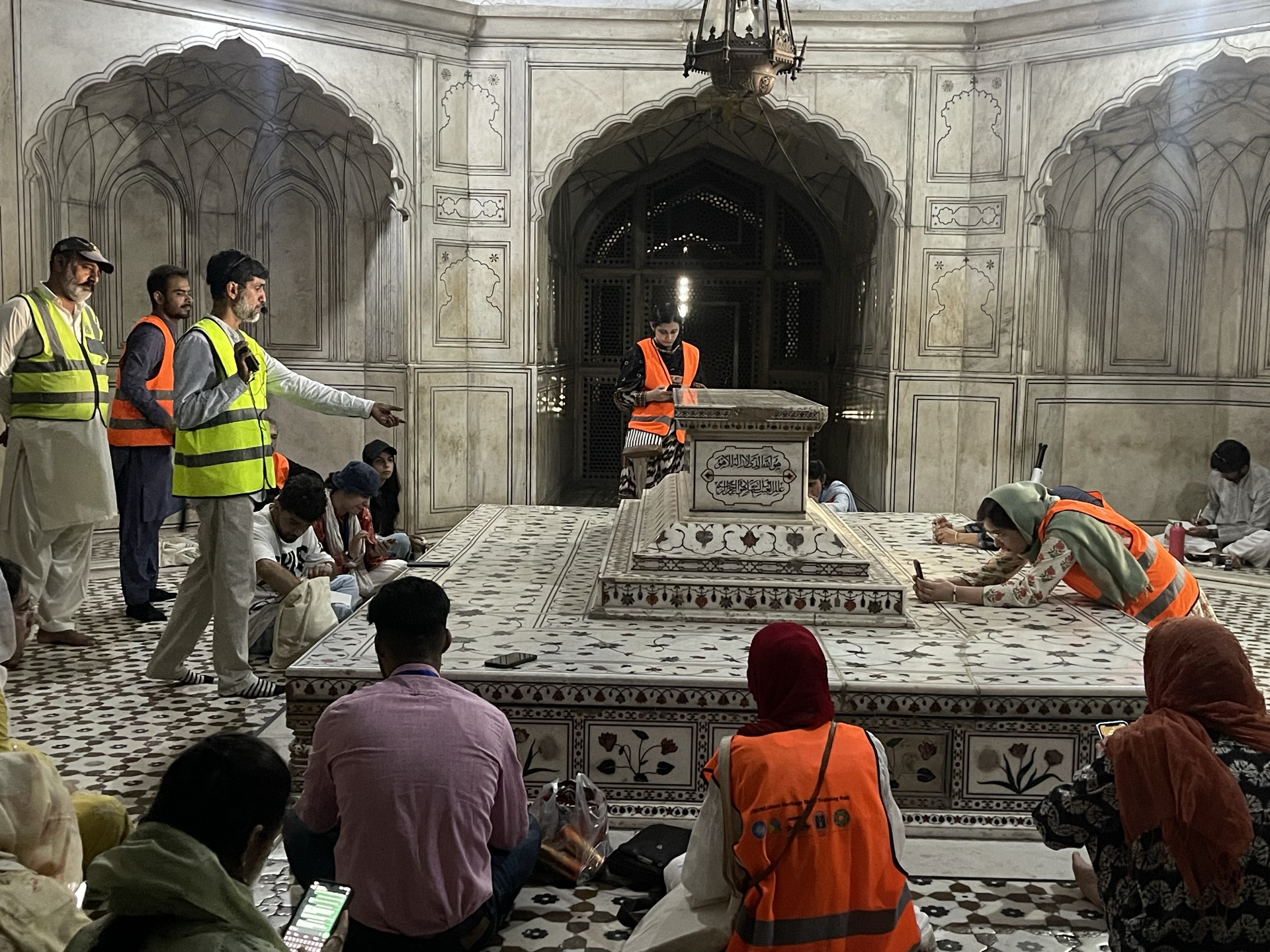
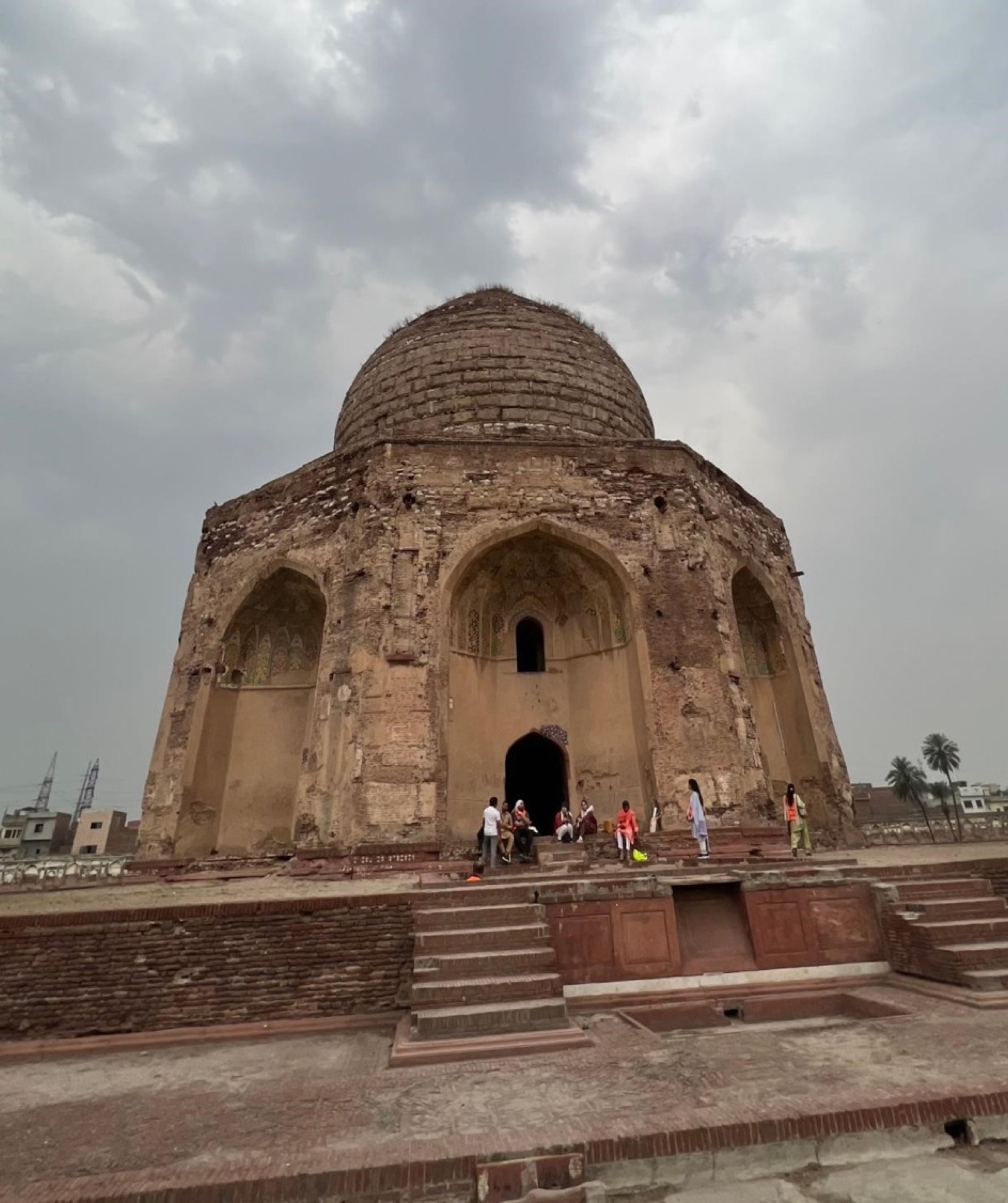
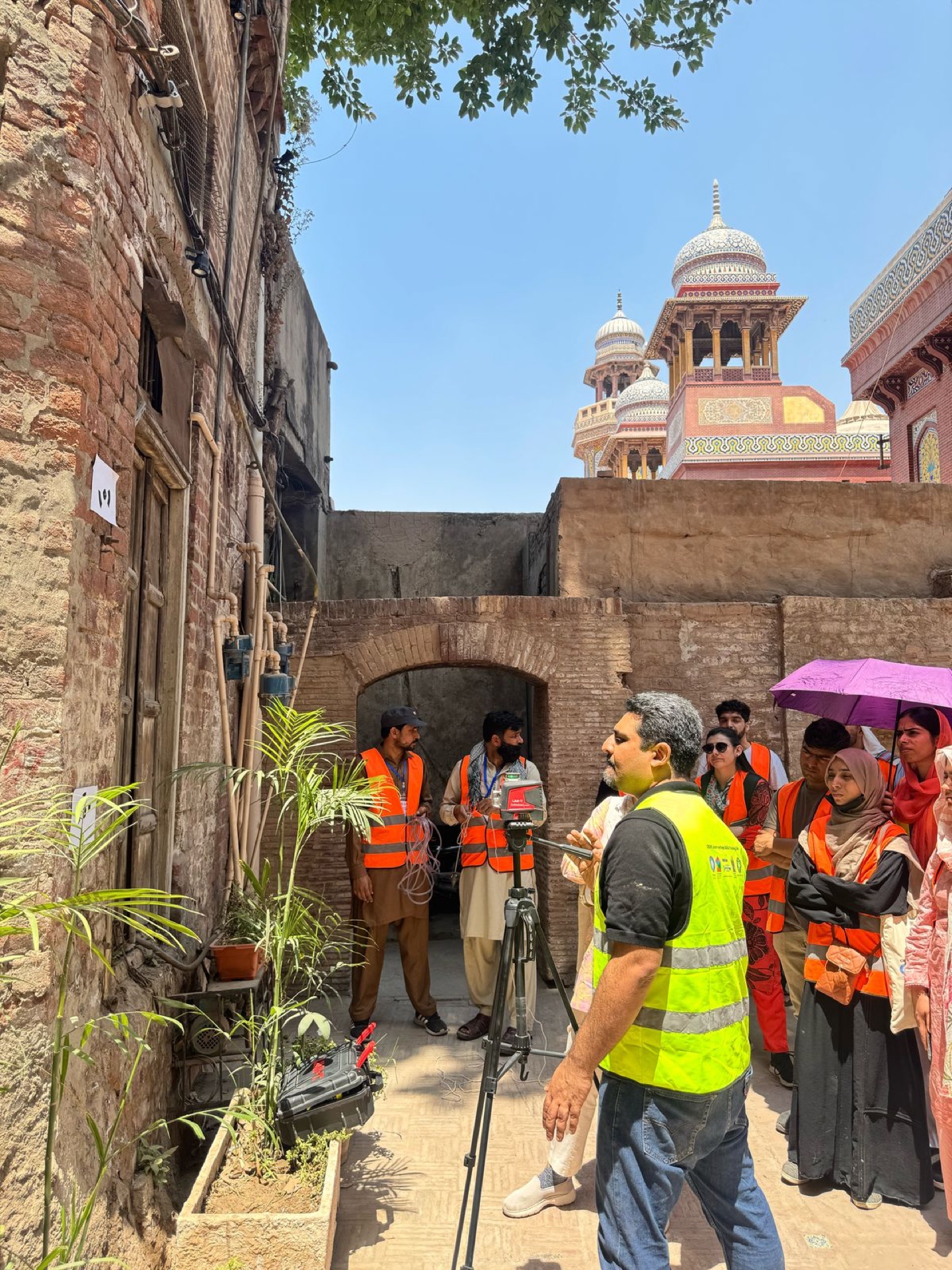
Alongside studio and on-site training, participants visited key Mughal-era monuments across Lahore to study heritage in its wider historic and urban context.
Guest Lectures
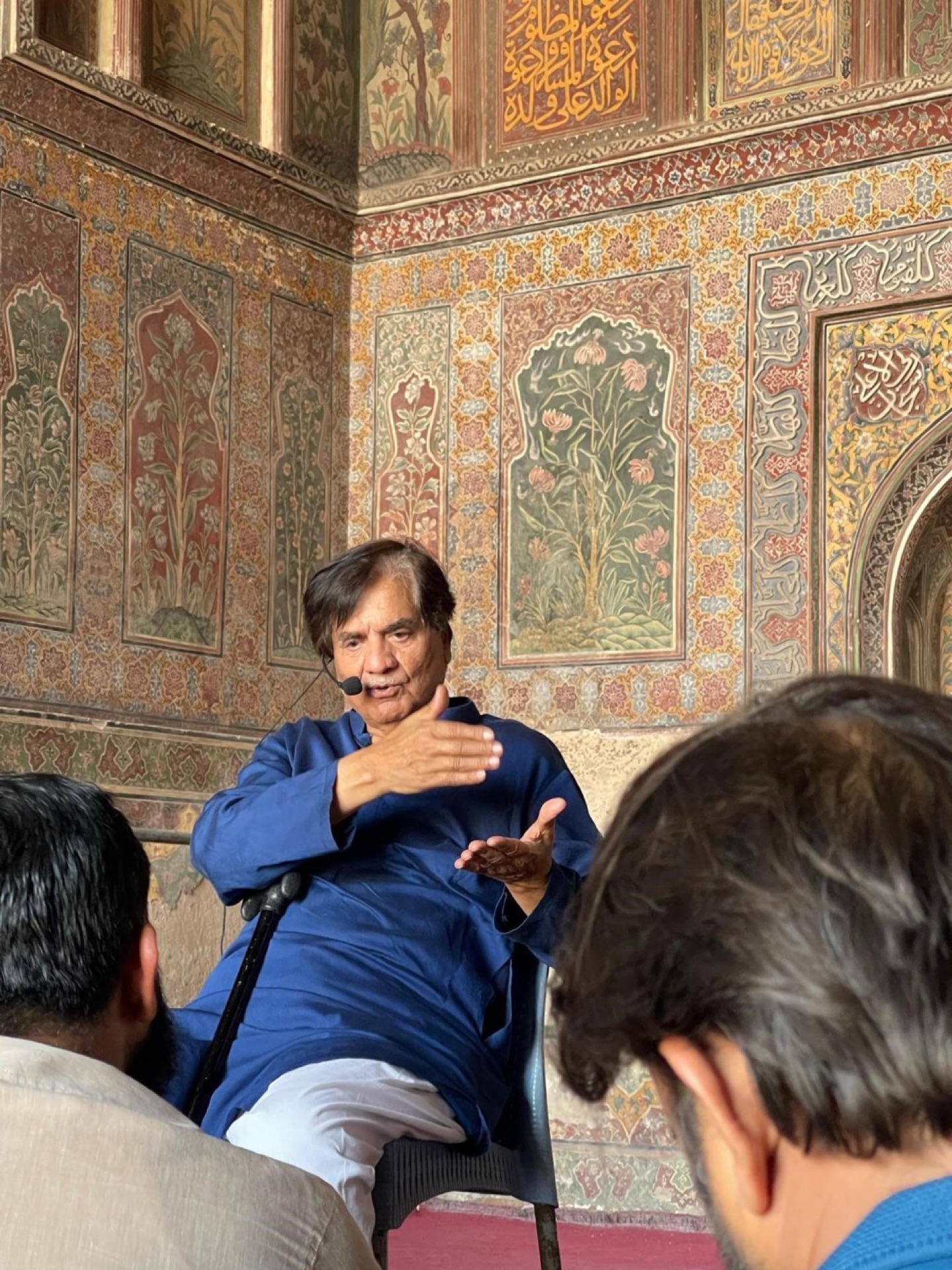
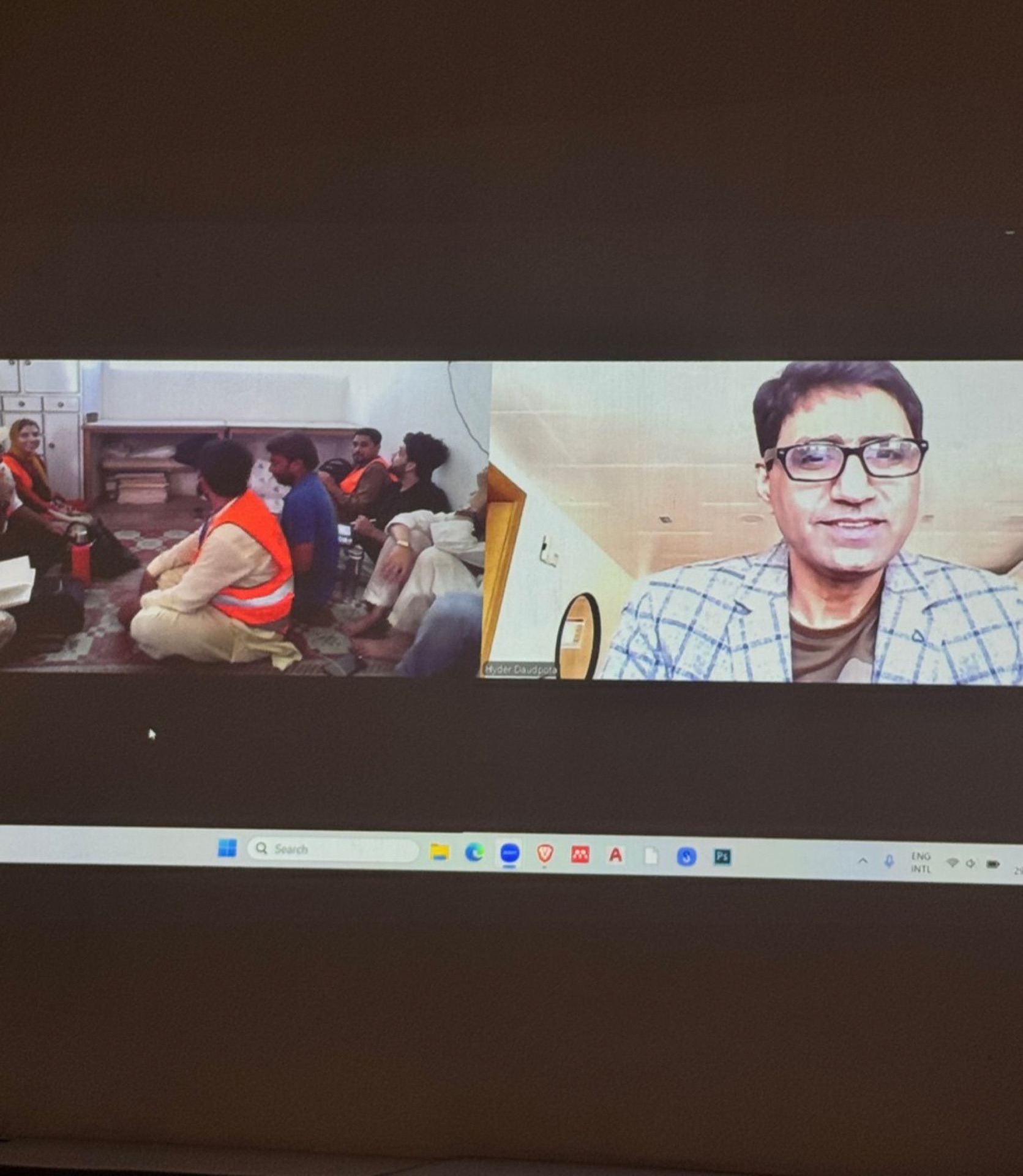
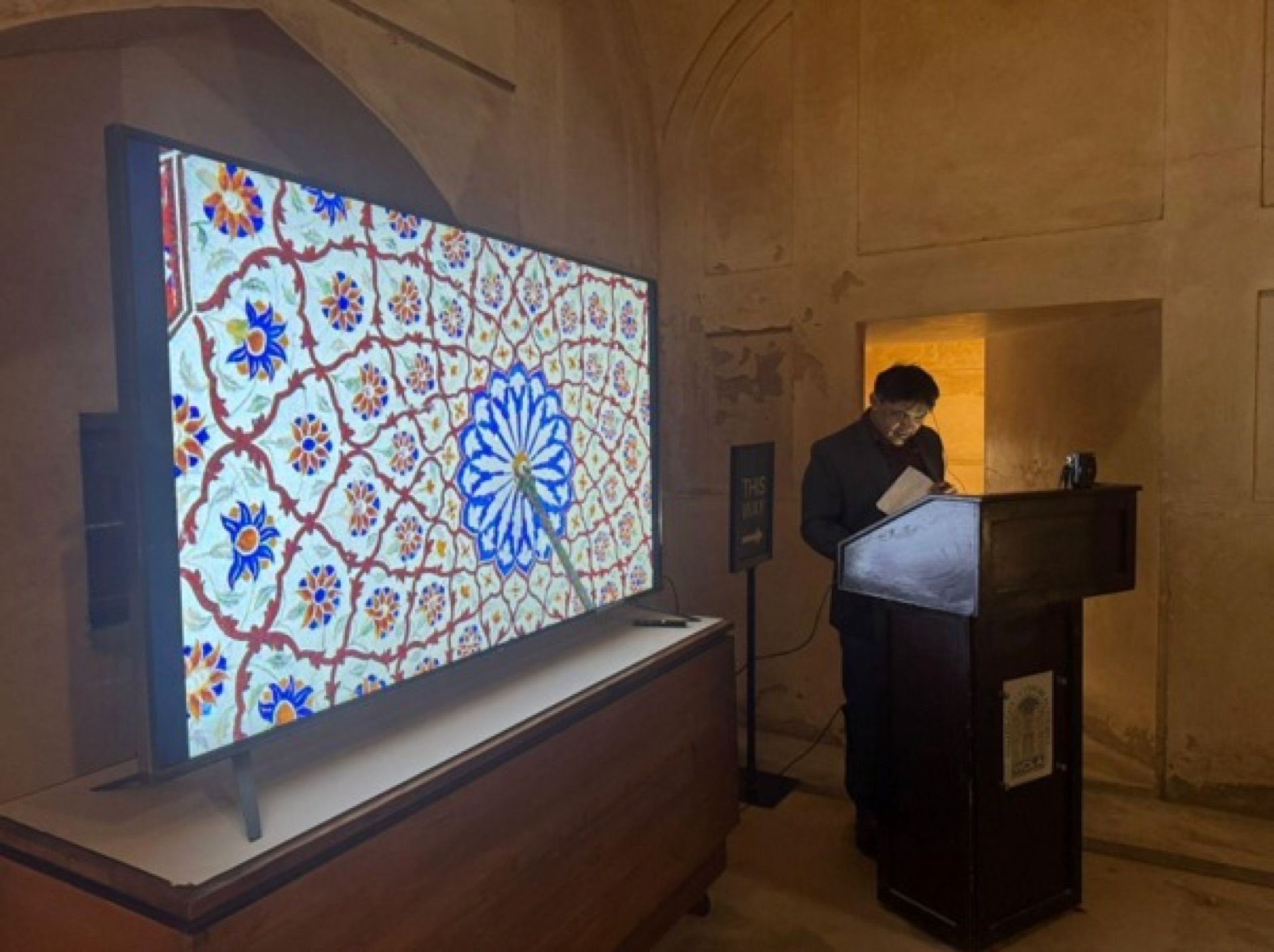
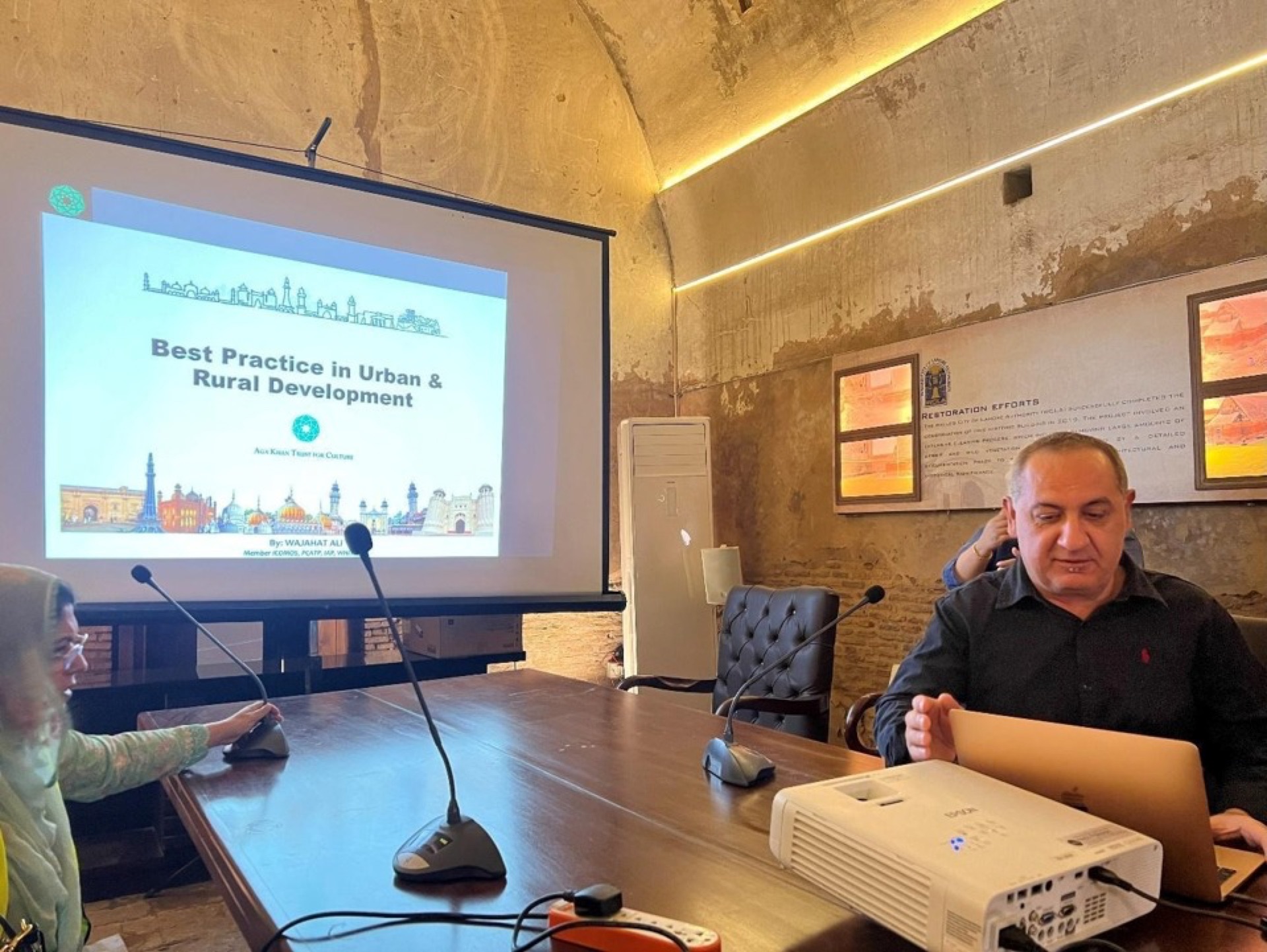
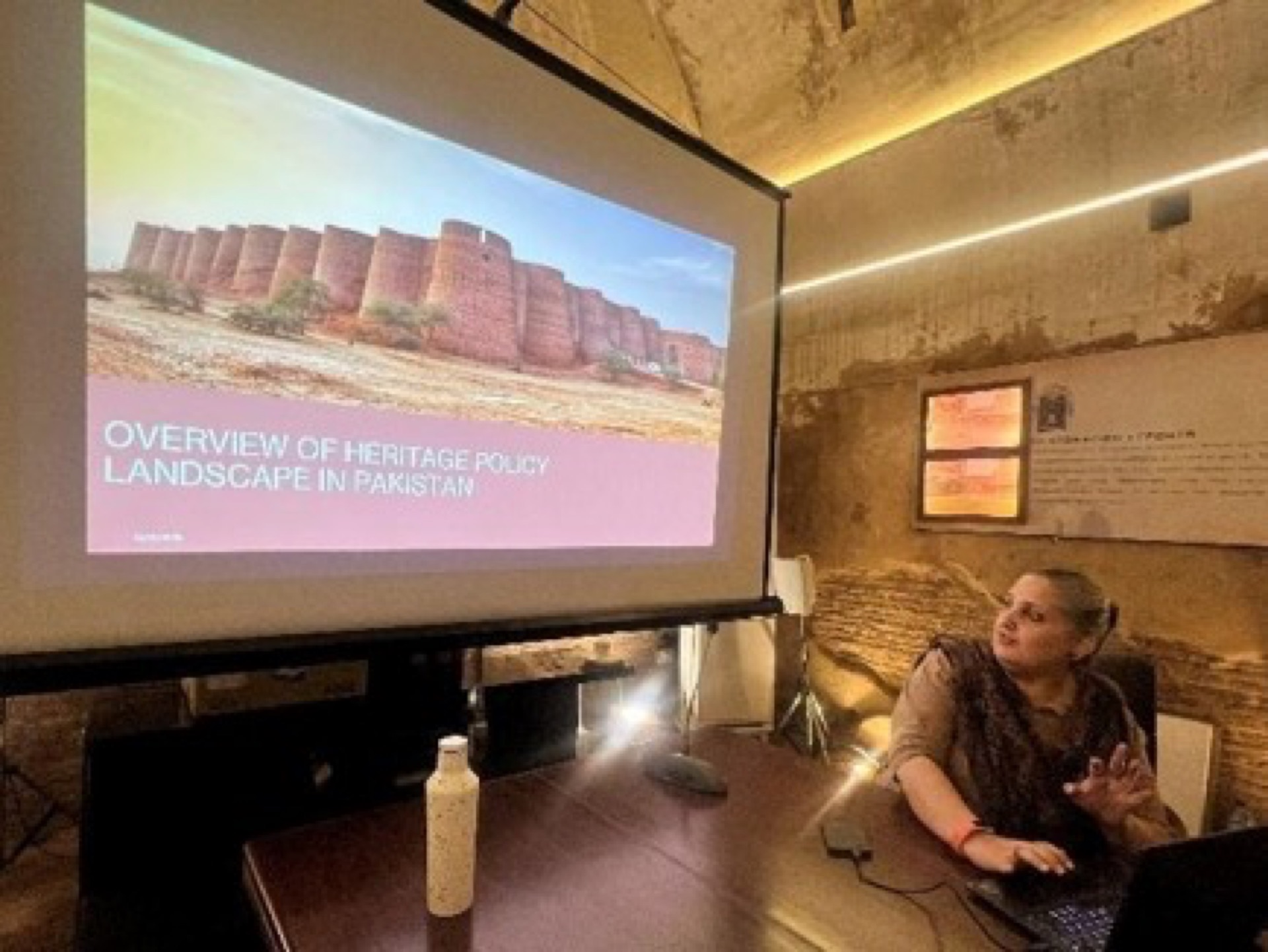
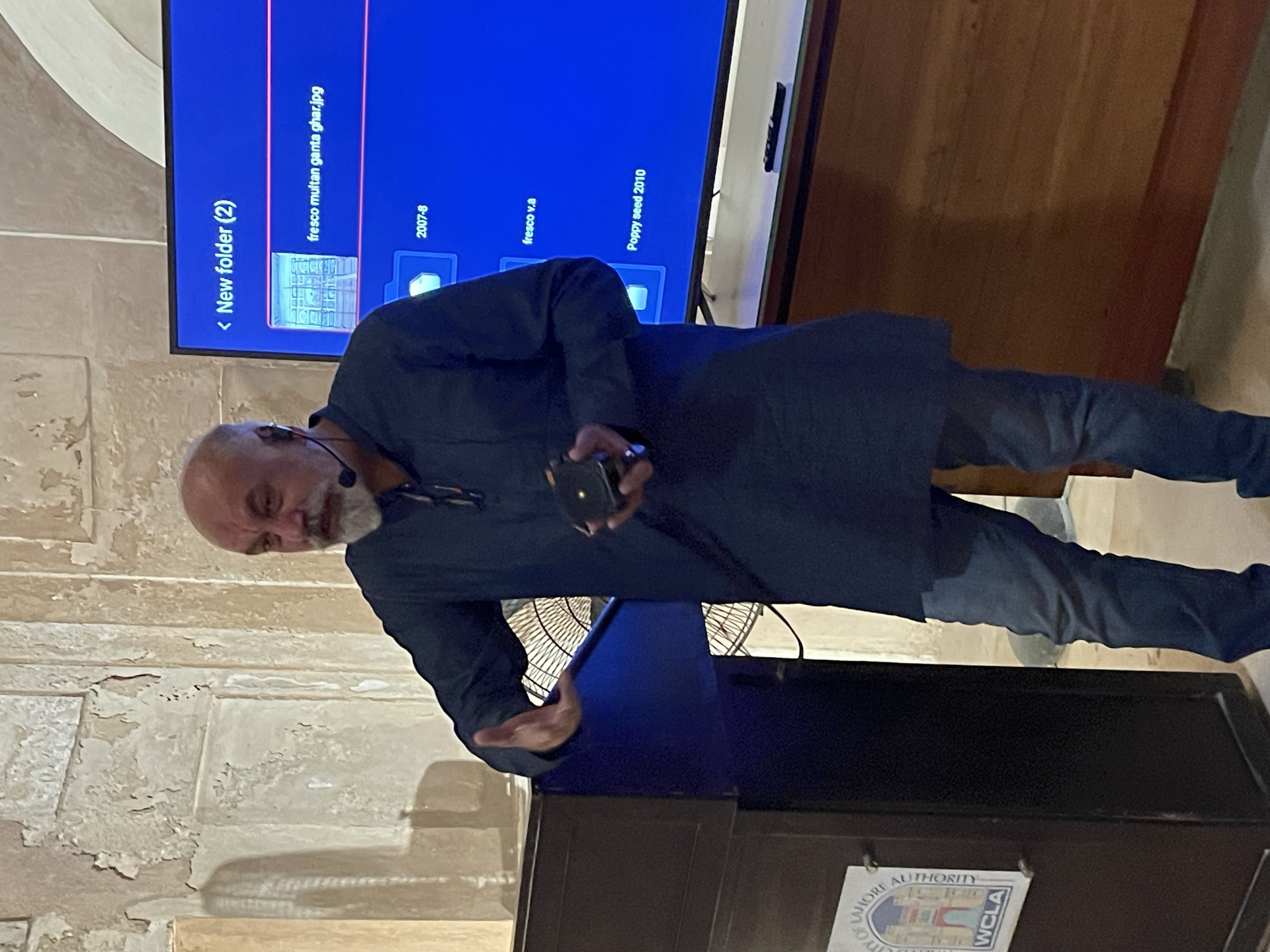
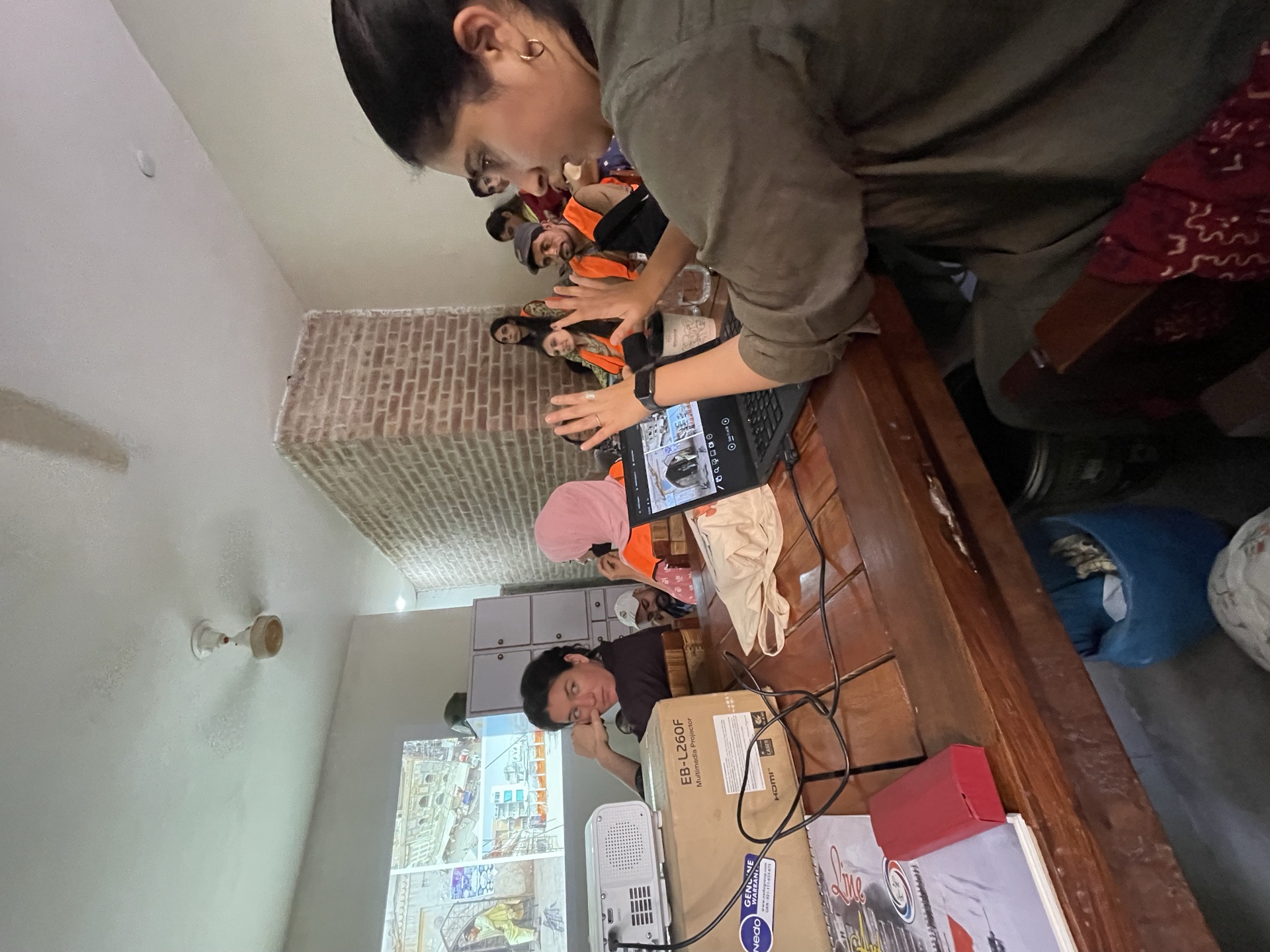
Guest lectures and specialist workshops gave participants critical insights into documentation methodologies, conservation theory, and the integration of traditional craftsmanship with contemporary practice.
Culminating Exhibitions
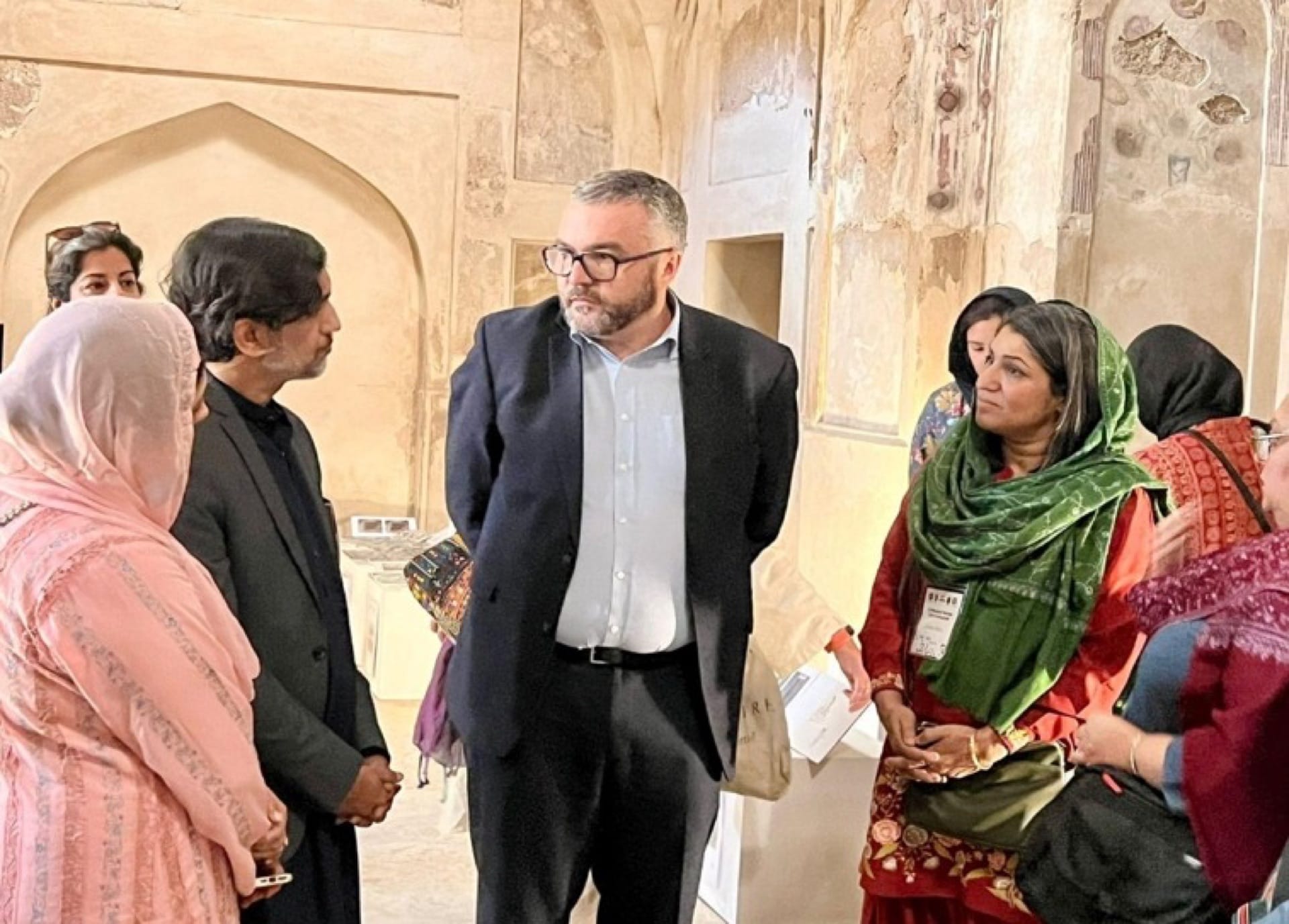
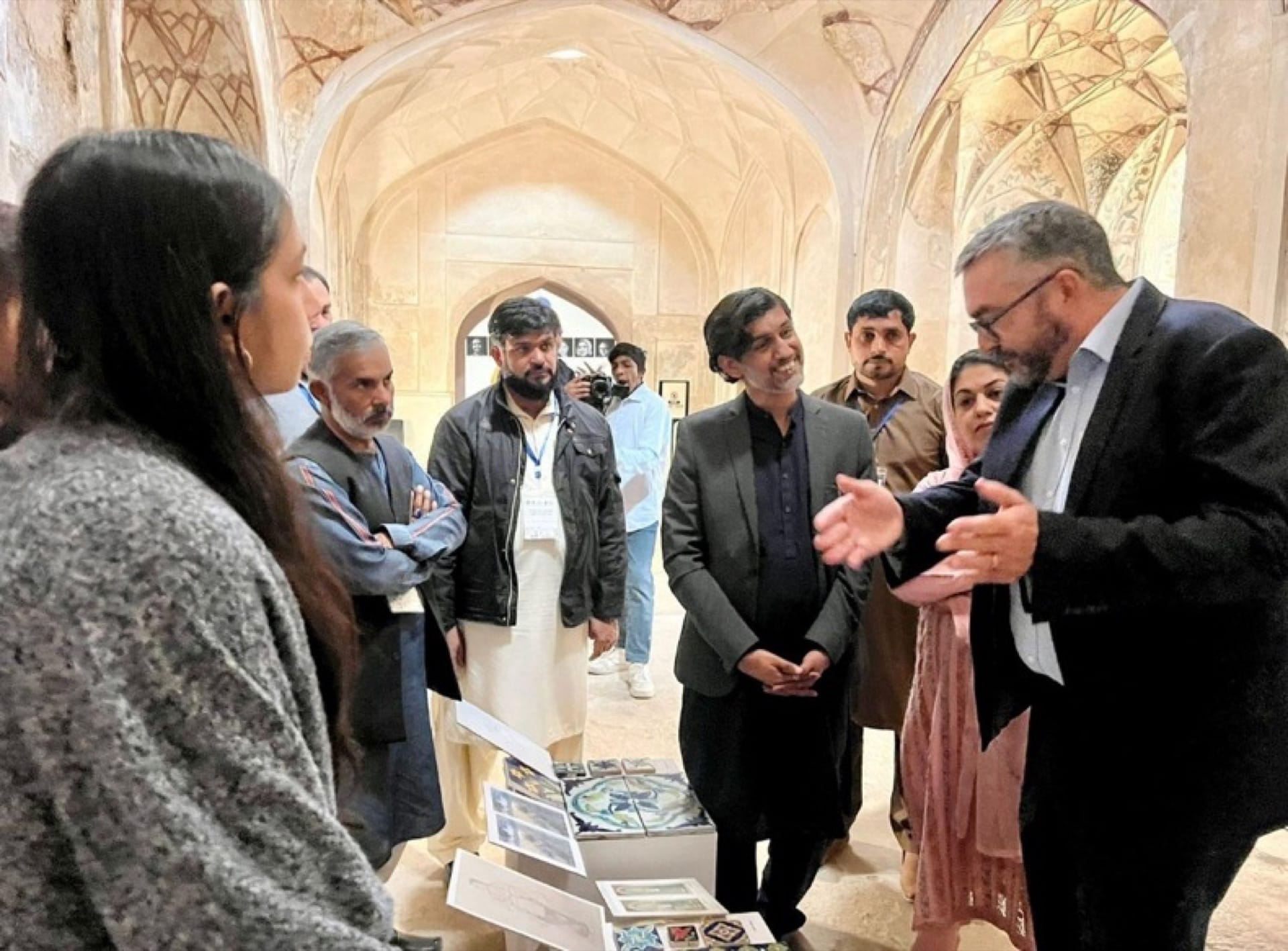
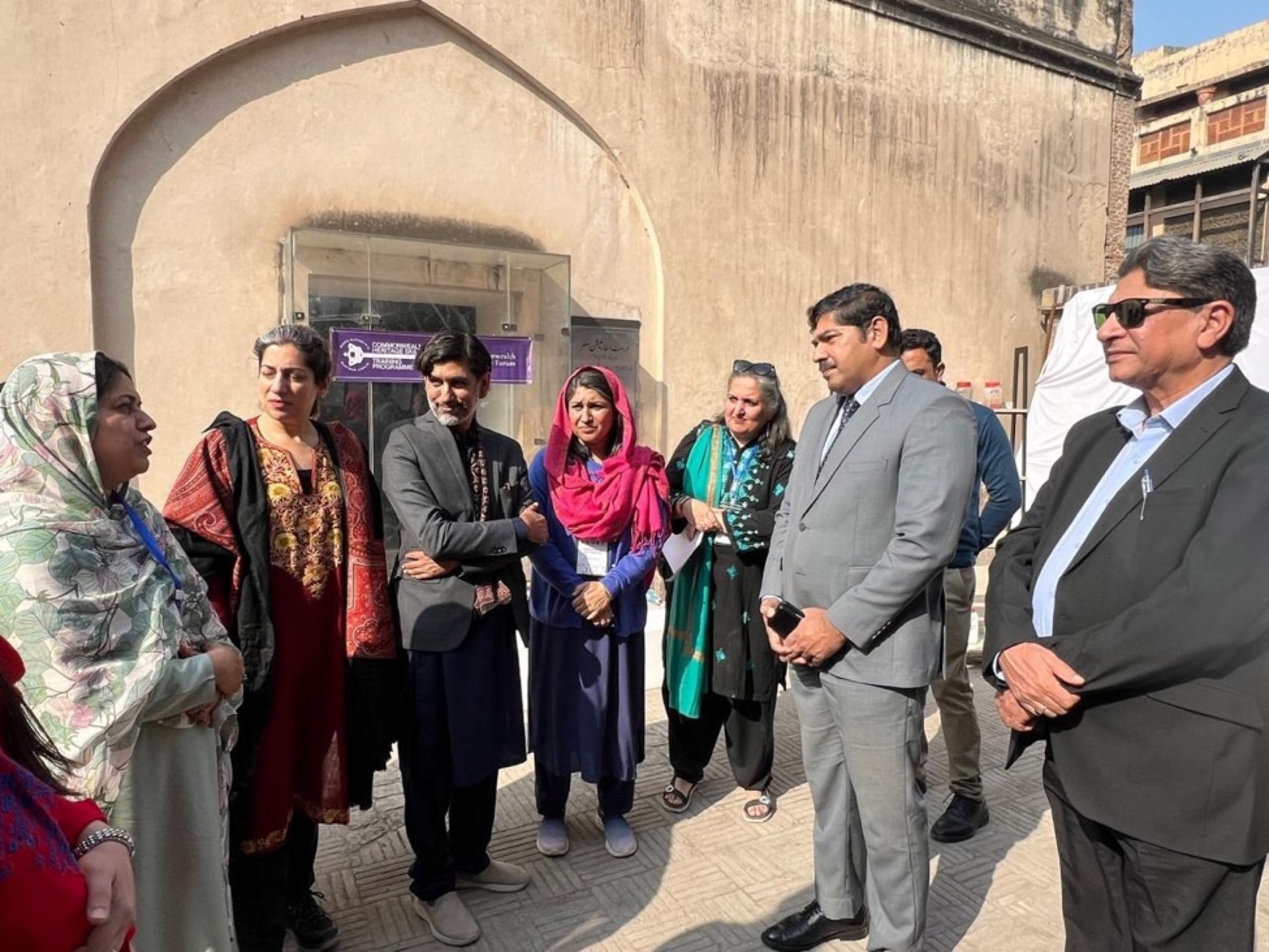
An exhibition titled “Lime, Kashi Kari and Naqqashi” was organized at the Calligraphers’ Bazaar of the Wazir Khan Mosque, Lahore, as part of the CROMLahore Skill Training Hub (Part I). Presented by CROMLahore and CHF, in collaboration with AKCSP and WCLA, the exhibition showcased the progress and learning outcomes of the trainees.
The exhibition utilized both enclosed and open-air spaces. A dedicated hujra titled Bagh-e-Nargis (The Garden of Narcissus) featured individual Naqqashi panels based on the Nargis motif, while the open corridor displayed Kashi Kari works, including lime plaster tiles, glazed geometric tiles, and Sozenkari-decorated pieces.
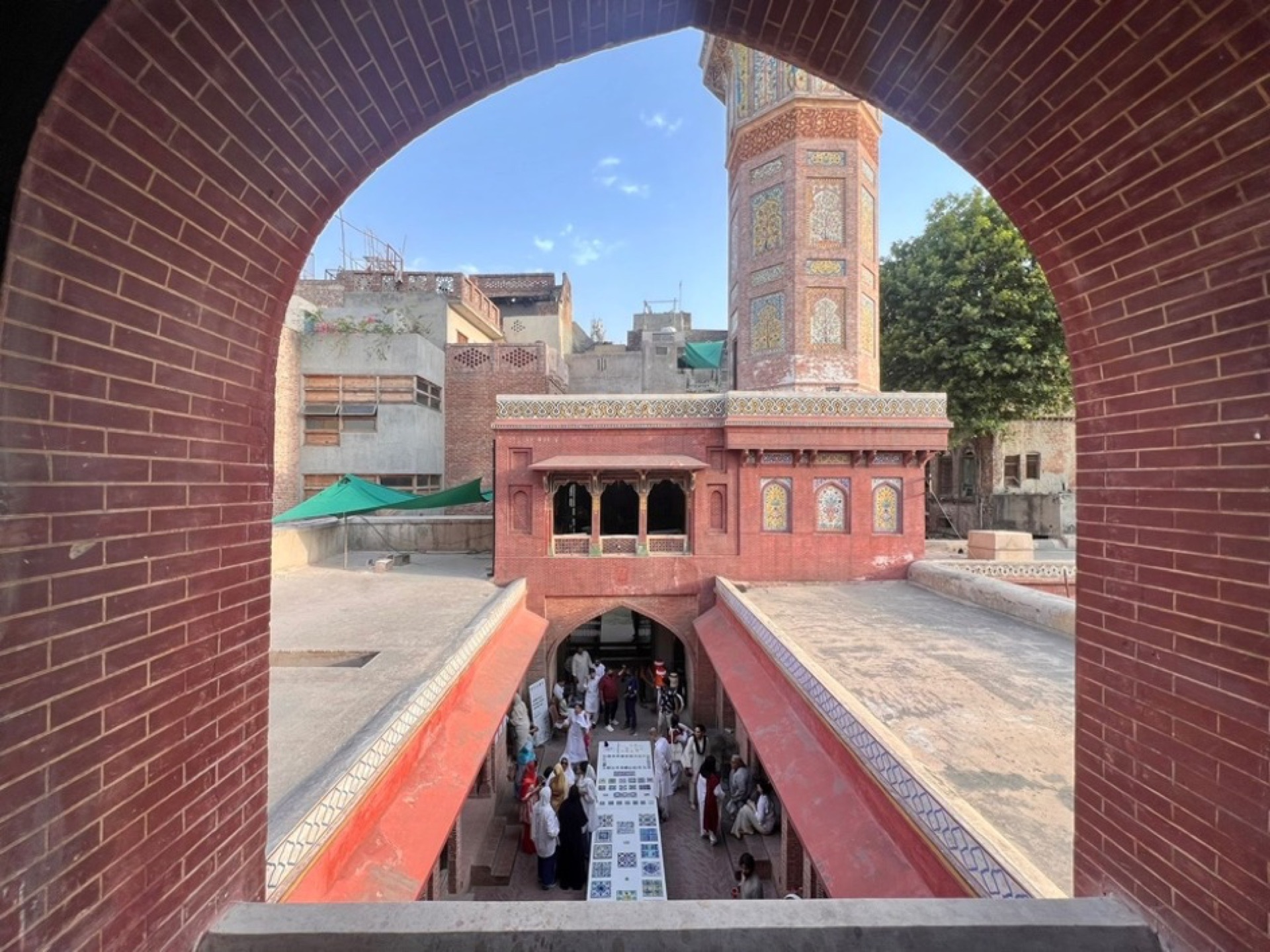
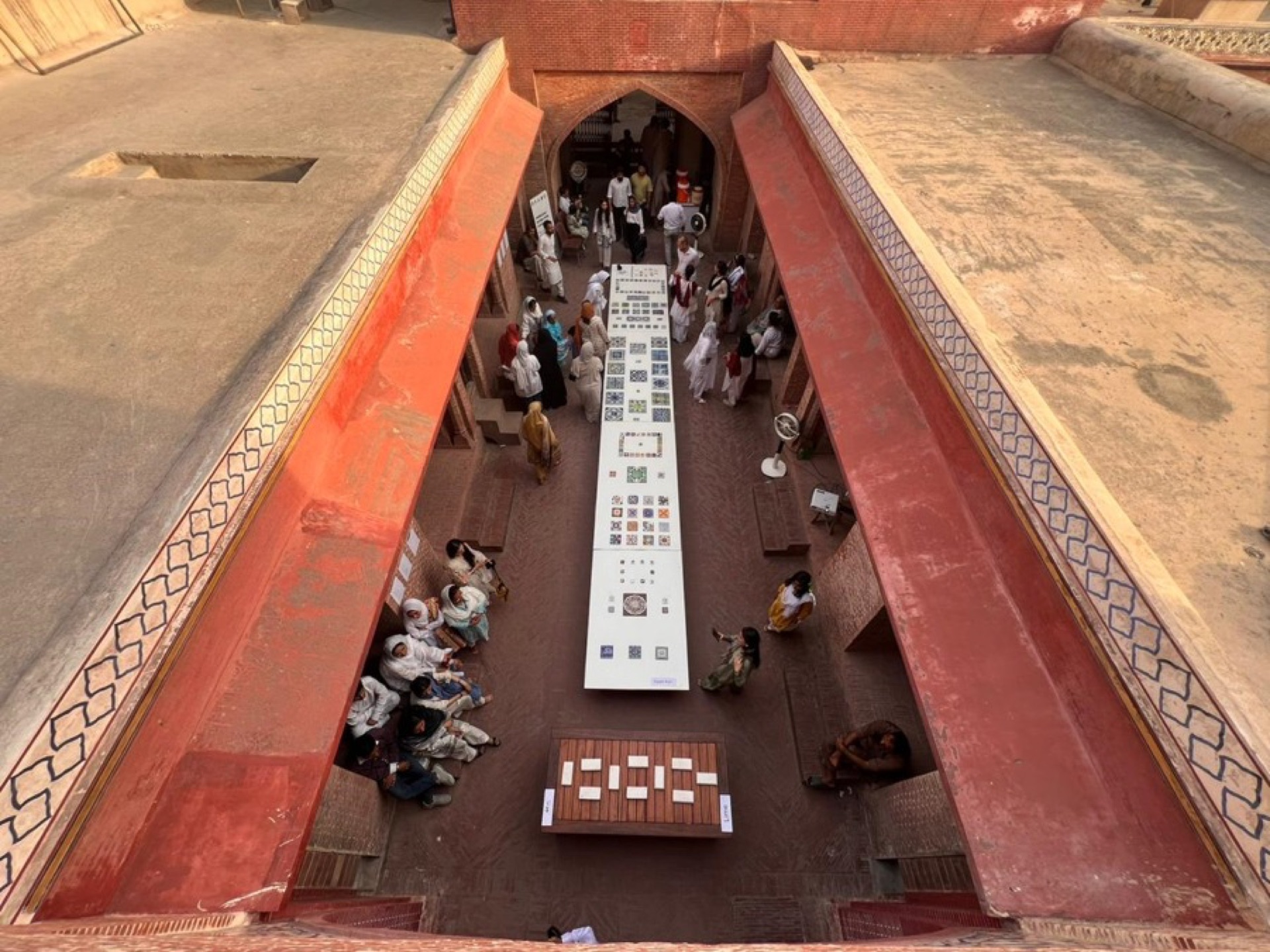
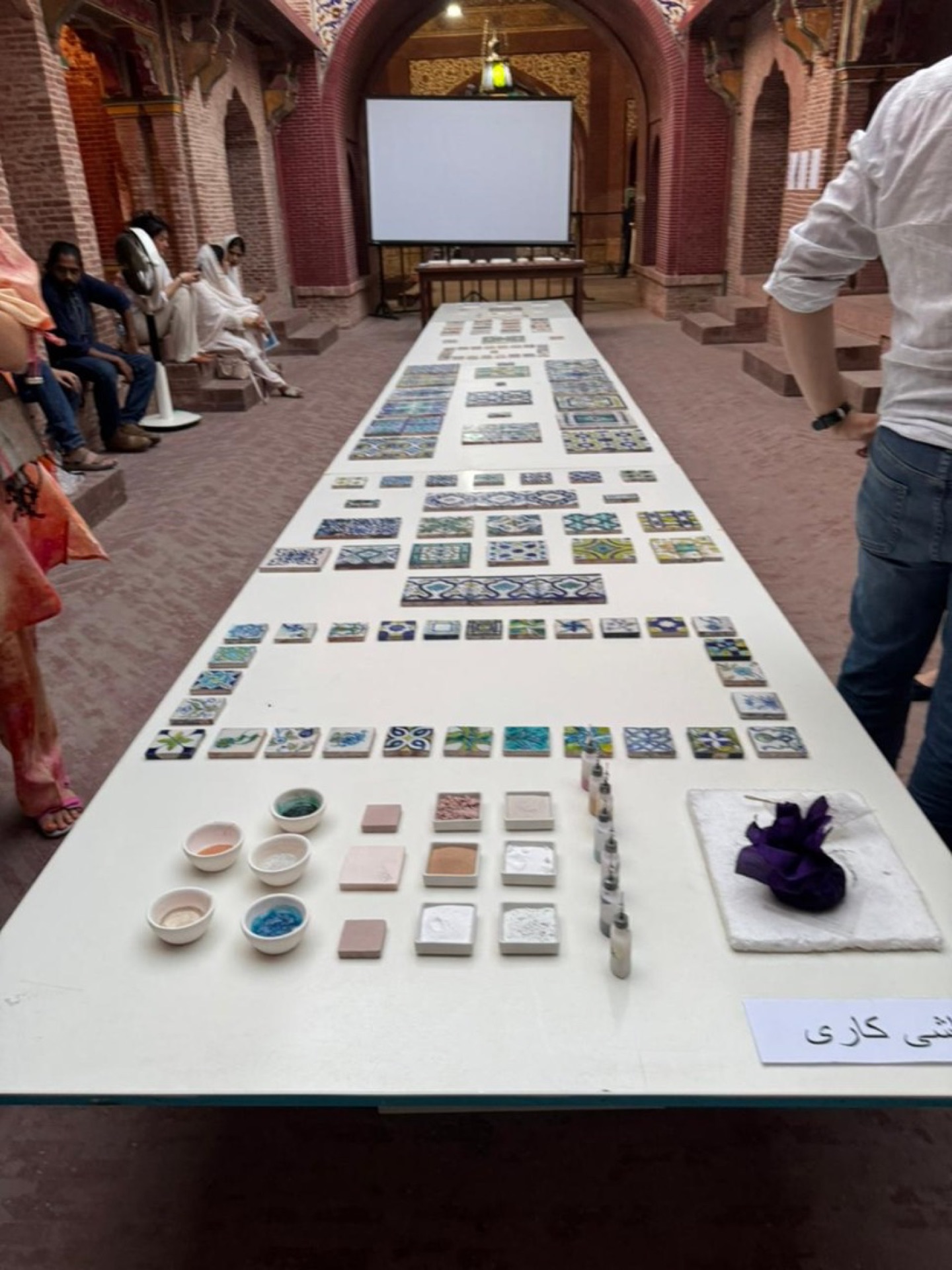
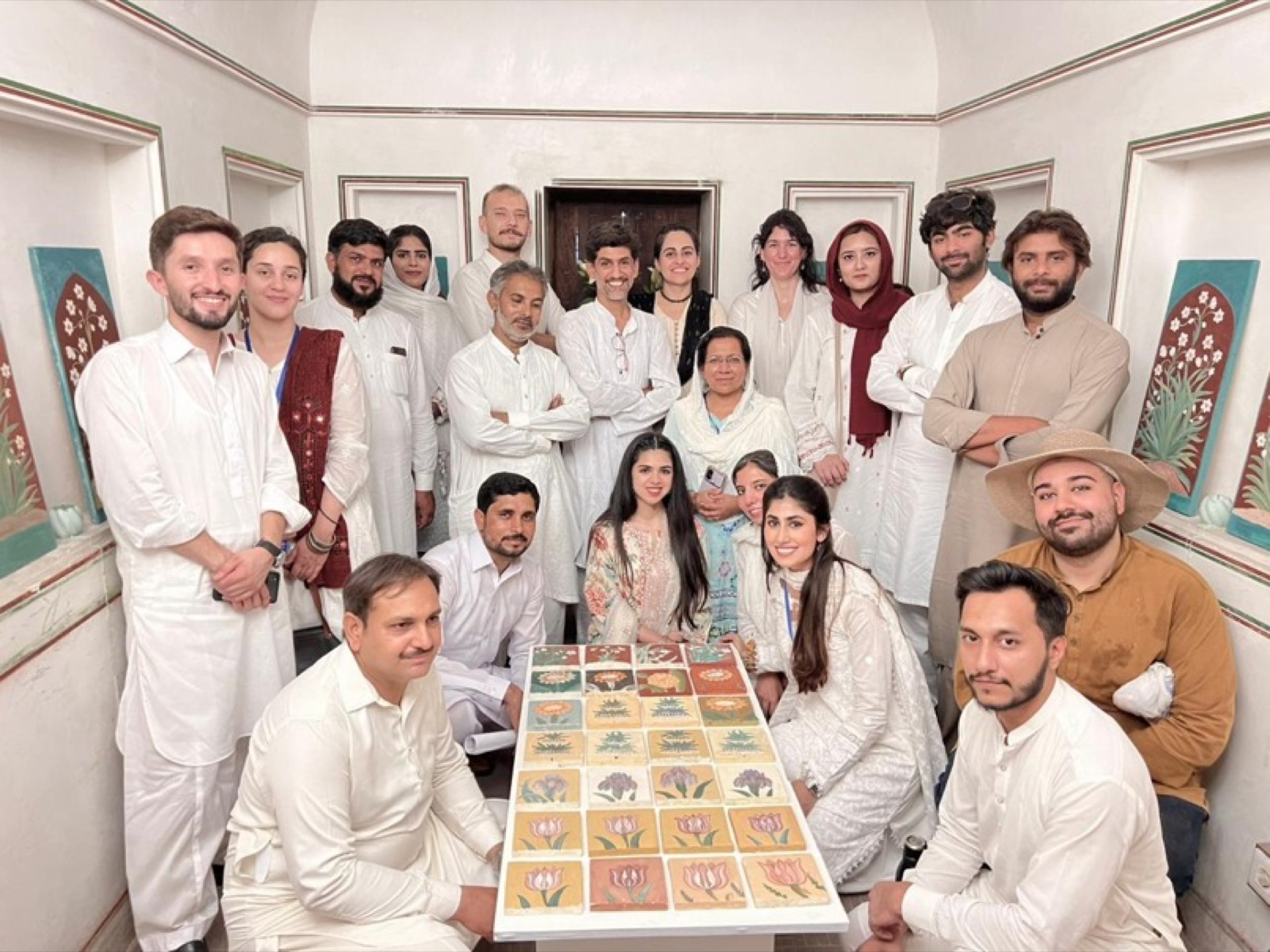
The exhibition showcasing the Heritage Skills Training Project was held from 23–27 November 2025, at the Wazir Khan Hammam in the Walled City of Lahore. Curated by Imran Ahmad, it presented works developed through intensive training in lime-based construction, Kashi Kari, and Naqqashi, offering visitors an immersive engagement with the heritage crafts that continue to shape the region’s architectural identity.